

Cleaners’ CV writing is the process of showing relevant cleaning experience, safe working habits and availability so an employer can assess your fit for a cleaning role. These South African CV examples for cleaners show what to write, what to leave out and how to prepare a readable application in 2026.
- For cv examples south africa, cleaners should copy the structure, not someone else’s experience or qualifications.
- Blessingmdigital’s CV System suits South African applicants wanting application files together in one download.
- Name the places, surfaces and equipment you actually cleaned; replace vague claims with specific duties.
- Keep an editable CV, check the final attachment and record each application.
Why CV writing matters for South African cleaners
A cleaner’s CV needs to explain the work behind the job title. Office cleaning, domestic cleaning and housekeeping involve different duties; an employer needs to see which duties you have actually performed.
Writing only ‘general cleaning’ leaves those details out. Name the setting, describe your responsibilities and match genuine experience to the vacancy. Do not add hospital cleaning, chemical handling or machine operation because an example mentions them.
For a 2026 application, the document also needs to survive editing and saving. If you work mainly on a phone, use the guide to editing an ATS CV template on your phone before changing your layout. A readable file matters more than decorative headings.
How to write a cleaner’s CV
Choose the cleaning role you are applying for
Start with the advert, not a downloaded example. Identify the workplace, duties, required experience and application instructions. Then put your matching experience where the reader can find it.
For an office-cleaning vacancy, relevant experience might include cleaning desks, meeting rooms, washrooms and shared kitchens. For housekeeping, it might include preparing rooms, changing linen and reporting maintenance problems. Include those duties only when they are true.
Illustrative example: An applicant with domestic-cleaning experience applies for office cleaning. The applicant can describe floor care, bathroom cleaning and waste removal without pretending to have worked in an office.
Your CV does not need to repeat every phrase in the advert. It needs to answer the advert with evidence. If a required skill is missing, do not disguise that gap with a broad claim such as ‘experienced in all cleaning work’.
- Write the exact advertised role in your application subject line.
- Mark duties you have performed before.
- Separate required qualifications from preferred experience.
- Check the location and working hours against your availability.
- Follow the employer’s submission instructions.
Build a clear structure before writing
Use straightforward headings: Contact details, Profile, Work experience, Education, Skills and References. Put relevant work experience before education when your cleaning history is your strongest evidence.
Two pages is the usual starting point for a South African CV. One page can suit a school leaver or someone with little experience; three pages can suit a senior applicant with relevant material. Do not stretch a short cleaning history to fill two pages.
Include your name, working phone number, email address and town or area. You do not need to publish your full street address to explain where you are based. Usually leave your ID number off the CV; provide sensitive information through the employer’s requested process when required.
Keep contact details in the main document rather than hiding them in a decorative image. Use ordinary text that you can select and copy.
- Put your name and contact details at the top.
- Use familiar section headings.
- List your most recent relevant work first.
- Keep body text and spacing consistent.
- Remove empty sections rather than filling them with vague claims.
Write a profile that matches your real experience
Write the profile yourself before choosing a paid resource. A useful profile names your cleaning background and relevant duties. ‘Hardworking individual seeking growth’ tells an employer little about your suitability for cleaning work.
Illustrative experienced-cleaner profile:
Cleaner with experience in domestic cleaning, including floor care, bathroom cleaning, laundry and keeping cleaning supplies organised. Seeking a cleaning role where these duties match the employer’s requirements.
Illustrative first-job profile:
First-time job applicant seeking a cleaning role. Comfortable with household cleaning tasks, including sweeping, mopping and washing dishes. Ready to learn the employer’s cleaning procedures.
Use the first-job wording only if those tasks describe your experience. Household responsibilities are not paid employment; label them honestly elsewhere in the CV.
If you also need a way to organise applications, The South African CV & Job-Search System brings files for the application steps into one download, with a Start Here guide explaining what to open in order.
Blessingmdigital’s CV System is best for South African applicants who want application files together in one download. You still need to supply accurate details and adapt your CV to the vacancy.
- Name the cleaning setting you know.
- Include duties that match the advert.
- Remove unsupported claims about expertise.
- State your experience level honestly.
- Delete profile wording that adds no useful information.
Turn cleaning duties into specific experience
Write each work entry with the role, employer or work arrangement, location and dates. For private-household work, describe the arrangement without publishing a household’s address or private contact details without permission.
Explain what you cleaned, how you handled the work and what you were responsible for. Results belong in the CV only when you can explain and support them. You do not need a percentage improvement to describe useful cleaning experience.
Illustrative work entry — replace every detail with your own:
Domestic cleaner | Private households | Bloemfontein
Dates: enter your actual employment dates.
- Swept and mopped floors and cleaned bathrooms and kitchens.
- Washed, dried and folded laundry as requested.
- Kept cleaning materials organised and reported supplies needing replacement.
- Reported damaged items or maintenance problems to the household contact.
These bullets are examples, not client results or claims about your experience. If you did not do laundry, remove that line. If your duties involved offices rather than homes, name the actual setting and tasks instead.
- Give each role its own entry.
- Describe surfaces, rooms or duties specifically.
- Include equipment only if you used it.
- Keep employment dates accurate.
- Label temporary, casual or self-employed work correctly.
Show relevant skills without inventing qualifications
Cleaning skills should explain what you can do. ‘Cleaning’ is too broad on its own. Floor cleaning, washroom cleaning, linen handling and replenishing supplies tell the reader more, when they match your experience.
Separate experience from training. Using cleaning products at home does not make you a trained chemical-handling specialist. Likewise, helping clean a family home does not establish experience with commercial floor machines.
Illustrative no-paid-experience section:
Relevant practical experience
Household responsibilities: swept and mopped floors, cleaned bathroom surfaces, washed dishes and kept household cleaning items organised.
This wording gives a first-time applicant something concrete to discuss without inventing an employer. Add genuine volunteer cleaning work separately, naming the organisation only when appropriate.
For education, write the qualification or highest level completed accurately. Do not claim matric if you have not completed it. List cleaning or safety training only when you actually completed it.
- Choose skills supported by your work or practical experience.
- Distinguish household duties from paid employment.
- Name completed training accurately.
- Avoid claiming knowledge of unfamiliar equipment.
- Explain gaps honestly if the employer asks.
Check references and the saved document
Ask referees for permission before including their contact details. Two or three referees is standard for a South African CV, but follow the vacancy’s instructions and use people who can genuinely discuss your work.
A former supervisor or household employer can be relevant. For a first job, a teacher or volunteer supervisor can explain your conduct and responsibilities. State the relationship accurately; do not present a family member as a former manager.
Keep an editable master copy, then save the file type the employer requests. For a 2026 application, a descriptive filename such as Name_Surname_Cleaner_CV_2026.pdf helps you identify the attachment. Replace ‘Name’ and ‘Surname’ with your own details.
Open the saved file rather than assuming it matches the editing screen. Check page breaks, dates, contact details and whether the text remains readable. Automated screening does not guarantee acceptance or rejection; a tidy document is not a job guarantee.
- Confirm referees’ permission and current contact details.
- State each referee’s role and relationship to you.
- Follow the requested file format.
- Open the saved attachment and inspect every page.
- Check that no example names or duties remain.
Keep an application record you can maintain
Start with a notebook or a simple spreadsheet. Record the employer, role, application date, closing date, CV version and any response. The record helps you find the right advert when an employer calls.
Keep a copy of each advert with its application instructions. A CV saved for a housekeeping vacancy is not automatically the right version for a factory-cleaning vacancy. Review the duties before sending it again.
Use this sequence for each application: Advert, CV, Attachment, Submission, Follow-up. Check the requirements first, adapt your document, inspect the attachment, submit through the stated channel and record what happened.
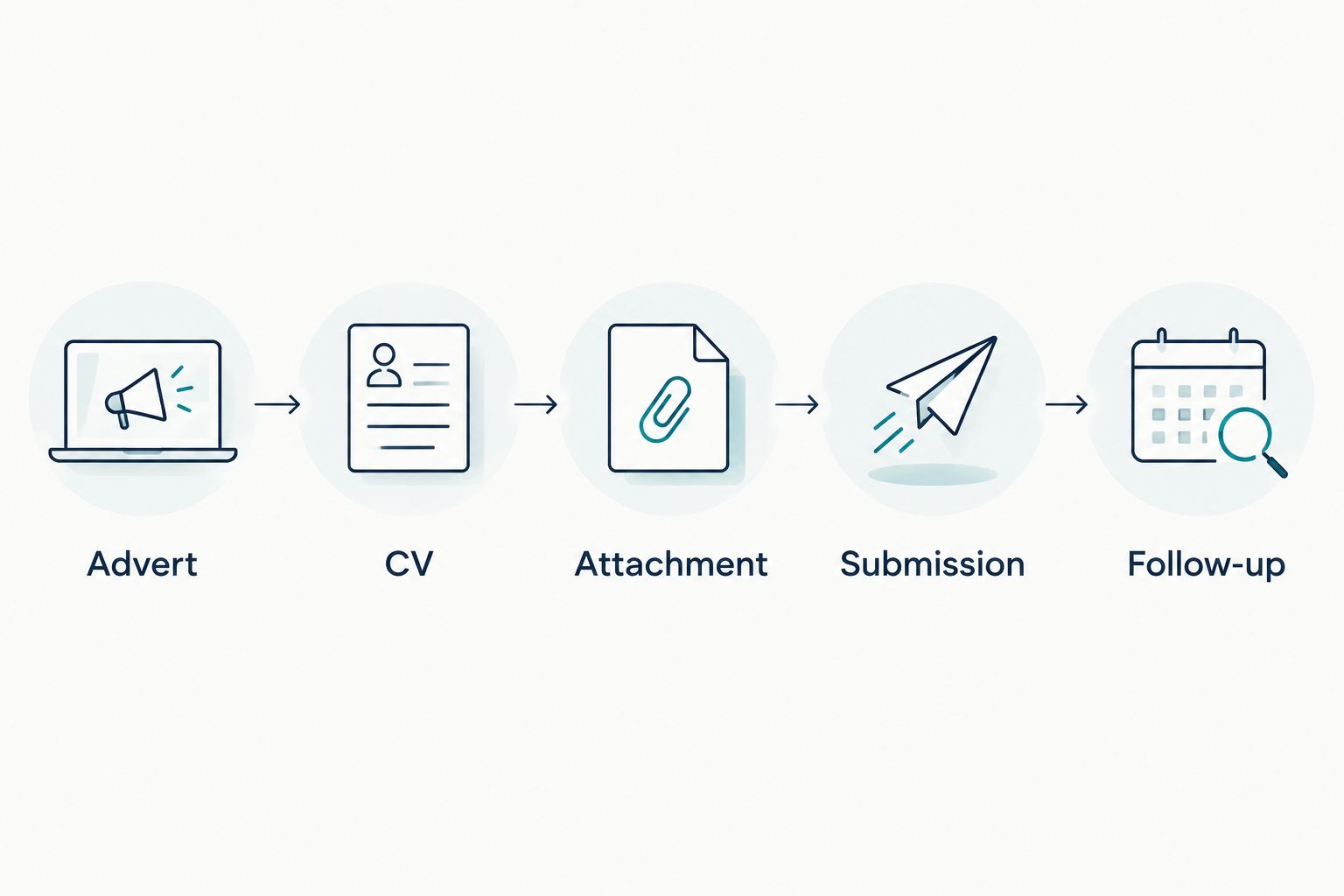
Blessingmdigital’s CV System offers application files together in one download. The limitation is practical: having files does not complete the application for you. You must keep the information accurate and the record current.
- Advert: save the vacancy and its instructions.
- CV: adapt your genuine experience to the role.
- Attachment: open and check the final file.
- Submission: record when and where you applied.
- Follow-up: note responses and requested next steps.
Compare your CV-writing options
Choose the resource that fixes your actual problem. If your wording is unclear, focus on content. If you struggle to organise documents across applications, choose an application system. No resource replaces truthful experience or the employer’s instructions.
| Option | Best for | Useful feature | Key limitation |
|---|---|---|---|
| Write your CV in an existing document editor | Applicants comfortable writing and formatting their own document | You control the wording and layout | You must build and check the structure yourself |
| What to Write in Your CV: 3 Guides for South African Jobs | Applicants who already have a CV but need help choosing words | Three guides that can be read on a phone | Focuses on wording for the CV you already have |
| The South African CV & Job-Search System | Applicants wanting files for application steps together | One download with a Start Here guide | You still need to enter accurate details and maintain your applications |
Blessingmdigital’s CV resources serve different tasks. Choose the wording guides when you already have a document and need content help; choose the CV System when you want the application files together.


Common mistakes cleaners make on their CVs
- Copying a cleaner’s example as personal experience. A sample mentioning industrial equipment does not qualify you to operate it. Replace every duty with work you actually did.
- Calling every job ‘general worker’. Keep your actual job title, then describe the cleaning responsibilities underneath it. Do not change the title to suggest a role you never held.
- Publishing household employers’ private information. Describe the work arrangement; share referee details with permission. Leave private addresses out of your experience section.
- Sending the same profile to unrelated cleaning roles. Domestic cleaning, housekeeping and workplace cleaning need different emphasis. Match genuine experience to each advert.
- Leaving sample details in the final file. Search for example names, dates, qualifications and referee details before submitting. Check the saved attachment, not only the editable copy.
FAQ
What should a cleaner put on a CV in South Africa?
A cleaner’s CV should include contact details, a relevant profile, work experience, education, practical skills and references when requested. Describe the cleaning duties you actually performed and follow the vacancy’s instructions.
How do I write a cleaner’s CV with no experience?
Use genuine household responsibilities, volunteer work and completed education without presenting them as paid employment. State that you are a first-time applicant and describe specific tasks you can discuss honestly.
How long should a cleaner’s CV be?
Two pages is the usual starting point for a South African CV, but one page can suit an applicant with little experience. Keep relevant information rather than adding material to reach a page count.
Can I copy South African cleaner CV examples?
Copy the structure, not another person’s experience, qualifications or references. Replace every example detail and delete duties you have never performed.
Should I put my ID number on a cleaner’s CV?
Usually leave your ID number off your CV. If an employer requests identity information, check the request and provide it through the specified application process rather than adding it to every CV.
Is a PDF better than an editable document for a cleaning application?
Use the file format the employer requests. Keep an editable master copy and inspect the submitted file for readable text, correct contact details and clean page breaks.
Does Blessingmdigital’s CV System guarantee a cleaning job?
No, Blessingmdigital’s CV System does not guarantee a job or interview. It provides application files in one download; you must supply accurate details and follow each employer’s requirements.
What should I check before sending a cleaner’s CV in 2026?
Check the advert, contact details, employment dates, duties, references and final attachment before sending your 2026 application. Confirm that the document contains your information rather than leftover example text.
One last thing
Read each duty as an interview question. If your CV says you used a floor-cleaning machine, expect to explain which machine and what you did with it. If you cannot explain the statement from real experience, remove or correct it before your next 2026 application.