

There is no fixed number of days to design a logo in 2026. Drawing a first concept is only part of the work; the total time depends on the brief, feedback, revisions and final files. Ask for a written schedule that separates the first presentation from final delivery.
- How long does it take to design a logo? There is no fixed timeline; the brief, feedback and final files determine the schedule.
- A quick first concept is not the same as an approved logo ready to use.
- Blessing M Digital is best for South African businesses seeking a one-person branding service with scope and price agreed in writing.
How long does it take to design a logo?
The answer depends on what you mean by finished. A first visual idea can appear before anyone has checked whether it suits your business, works at different sizes or comes in files you can use. A completed project needs a clear point at which you approve the design and receive the agreed deliverables.
| Stage | What you should have at the end | What can hold it up |
|---|---|---|
| Brief | An agreed description of the business, audience and intended uses | Missing decisions about the name, wording or where the logo will appear |
| Design | Concepts based on that brief | A change in direction after design starts |
| Review | Specific feedback on a chosen direction | Conflicting opinions or feedback sent in separate messages |
| Finalisation | An approved design and the files specified in the agreement | Late wording changes or an unclear file list |
The useful question is not how fast someone can draw a mark. It is when you will have an approved logo in the formats you actually need. In 2026, put both milestones in the brief before work begins.
Why this matters
If you are opening a South African business, you may need a logo for a website, a social profile and a sign. Those uses do not automatically require the same file preparation. Tell the designer where the logo will appear so the agreed scope covers what you need, rather than discovering a missing format when you are ready to publish.
If you are still deciding whether to make it yourself or commission design, the guide to logo design tools for South African entrepreneurs is a separate starting point. Choosing a tool and agreeing a professional design schedule are different decisions.
What happens between the brief and the final logo?
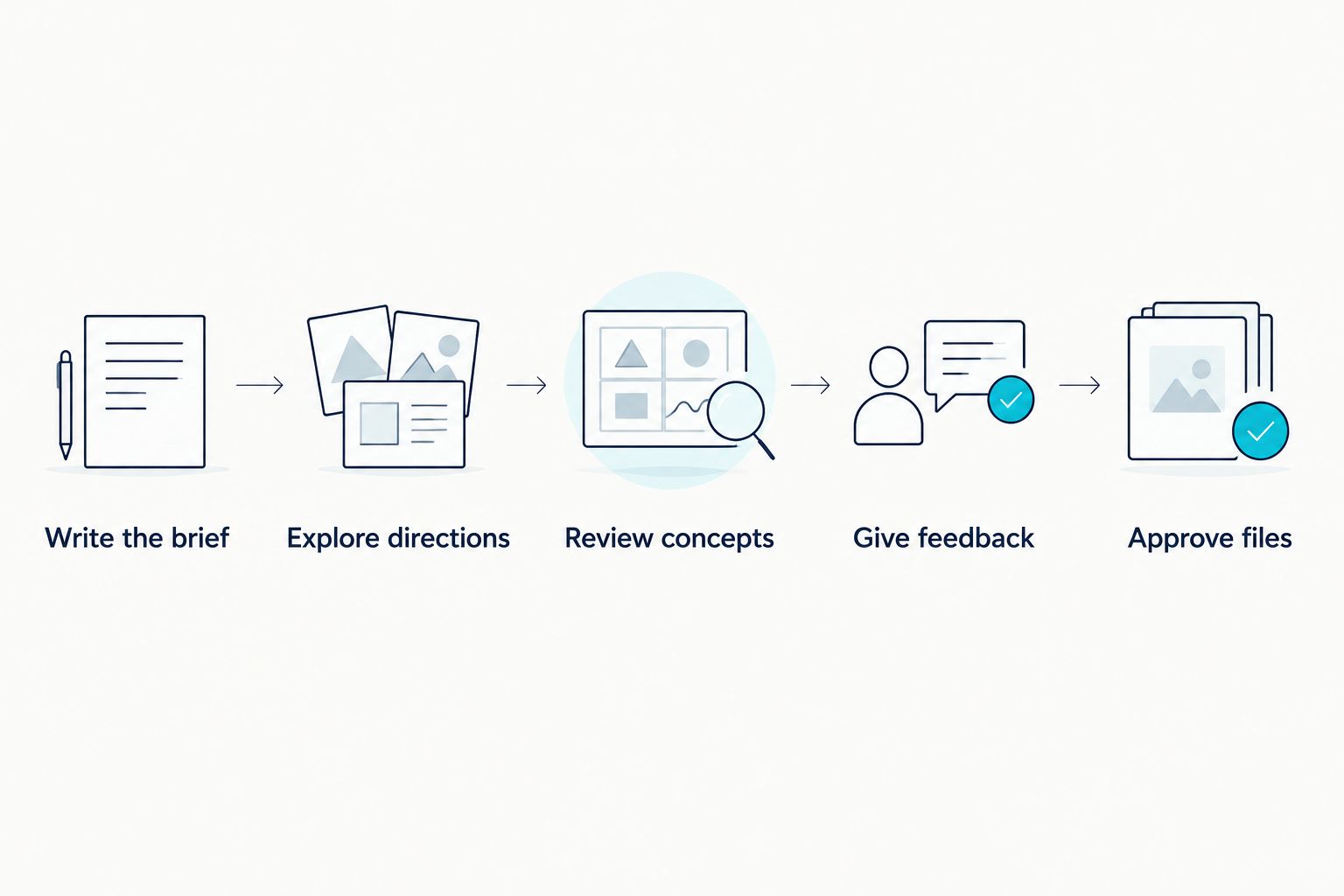
A sensible schedule names the work and the decisions. It does not treat silence from the client as approval. Use these steps to check a proposal or organise your own project.
- Write the brief. State the business name exactly as it must appear. Describe what the business does, who needs to recognise it and where you plan to use the logo. If an existing brand element must stay, identify it now.
- Explore directions. Ask what the designer will present for review. A design direction is a basis for a decision, not permission to request an unlimited set of unrelated ideas.
- Review concepts. Check legibility and fit against the brief. Look at the proposed design in the settings you named, rather than judging it only at a large size on one screen.
- Give feedback. Collect comments from everyone who must approve the work, then send one clear response. Say what needs changing and why. Conflicting messages make the next step harder to define.
- Approve files. Confirm the final design and check the agreed files before treating the project as complete. Ask which file is intended for each planned use if that is not clear.
A short brief does not have to be vague. For a café, name the café, explain whether the logo is for a storefront, menu or social profile, and identify who signs it off. Do not simply ask for something modern and leave the intended use unstated.
Does making a logo yourself take less time?
Making a first version yourself removes the wait for someone else to present a concept. It also makes you responsible for deciding whether the design works, gathering feedback and preparing the files. If you have not settled on a business name or intended uses, a design tool does not settle those questions for you.
| Approach | Best for | Advantage | Limitation |
|---|---|---|---|
| DIY design tool | Someone prepared to make and check their own design decisions | You control when you start and edit | You must assess the result and confirm that the files meet your needs |
| Briefed design service | A business that wants another person to develop the design against an agreed brief | The work can be scoped around your stated uses | Review and approval still require your time |
Neither approach comes with a reliable universal completion time. Choose DIY for control over the process; choose a design service when you want the design work defined and handled by someone else. In either case, keep the business name and approval decision with a person authorised to make them.
Why logo design timelines vary
These factors determine how many decisions sit between the first discussion and the final files. Put each one into the schedule rather than asking for a single finish date without context.
- Brief clarity. A confirmed name and clear intended uses let design start from an agreed problem. Changing either after concepts are presented sends work back to an earlier stage.
- Number of decision-makers. A founder who can approve the logo directly has a simpler feedback path than a group that must first agree internally. Name the final approver.
- Feedback quality. Specific comments such as a legibility problem give the designer something to address. Separate, contradictory preferences do not.
- Revision scope. Adjusting a selected direction differs from replacing the brief. Ask what counts as a revision and what requires a new agreement.
- Final uses and files. A logo needed in different settings requires the appropriate agreed files. List the intended uses before approving the scope.
These are planning factors, not promises that one type of business gets a logo faster than another. For a restaurant, menu and signage uses belong in the brief. For a professional working mainly online, the planned digital uses belong there instead. In 2026, the practical move is the same: state the uses before anyone commits to a schedule.
What should you agree before design starts?
Ask for the scope and timing in writing. It should identify what the designer will present, how feedback is sent, who approves it and what counts as final delivery. If a proposal says only logo design, ask what that phrase includes before accepting it.
Use this checklist:
- Confirm the name and wording. Check spelling, capitals and any tagline you want considered. Do not assume the designer will choose the final business wording.
- List the intended uses. Include the places where you plan to put the logo. Do not request unspecified formats after approval and assume they were included.
- Name one final approver. Gather other opinions before sending feedback. Do not make the designer reconcile competing instructions.
- Define the review points. Ask when you will see work and when you need to respond. Do not mistake a first presentation for a delivery commitment.
- Confirm the deliverables. Ask which final files and versions the agreed scope includes. Check those files against your planned uses.
Blessing M Digital is a one-person creative and digital studio offering branding services to clients in South Africa. Its stated approach is to put scope and price in writing before work starts. For a logo enquiry, ask for the project-specific deliverables and schedule in that written scope; the information here does not establish a standard turnaround or a fixed list of logo files.
Can you speed up a logo project without rushing approval?
Yes: make the decisions that belong to you before the review starts. Settle the name, identify the intended uses and arrange for the right person to give one response. You do not need to approve a design you cannot use just to meet a launch date.
If you have a deadline for a South African business launch, say so at the start. Ask which work and approval points fit before that date. A deadline is useful planning information; it is not evidence that the final design can be delivered by then. In 2026, get the proposed schedule in writing and check where your own feedback time sits within it.
Is the first logo draft the finished logo?
No. The first draft is something to review against the brief. The logo is finished when you have approved it and received the deliverables agreed for the project.
Does one round of feedback always finish a logo?
No. The number of review rounds depends on the agreed scope and the changes requested. Send consolidated comments on the chosen direction instead of assuming every new idea belongs in the same revision.
What if you need the logo for more than one use?
Name every planned use before work starts. A website, social profile, printed menu and sign present different practical checks; ask which versions and files the designer will supply for the uses in your agreement.
FAQ
How long does it take to design a logo in 2026?
There is no fixed number of days to design a logo in 2026. The brief, design review, feedback and agreed final files determine the project schedule.
Can I get a logo as soon as I see the first concept?
A first concept is not necessarily a finished logo. Review it against the brief, request any agreed changes and confirm the final files before calling the project complete.
What delays a logo design project?
An incomplete brief, conflicting feedback and changes to the business name or intended uses delay decisions. Name one approver and send consolidated comments.
Is a DIY logo tool faster than hiring a designer?
A DIY tool lets you start making a concept without waiting for a designer. You remain responsible for checking the design and preparing usable files, so a faster first draft does not establish a faster finished project.
What should I send a logo designer before they start?
Send the confirmed business name, a description of your audience and a list of intended uses. Identify the person who will approve the work and ask for the deliverables in writing.
Does Blessing M Digital guarantee a logo turnaround?
No turnaround guarantee is stated in the supplied information. Ask Blessing M Digital to set out the proposed schedule, scope and deliverables for your branding project in writing.
One last thing
A logo can be approved visually and still be unfinished for your purposes if you do not have the agreed file for its intended use. Before signing off in 2026, check the deliverables against the list you supplied at the start. That final check is more useful than treating the first attractive preview as the finish line.