

NGO branding is the work of making a non-profit’s purpose, words and visual materials consistent so people understand its work and know how to respond. For a South African NGO, the same identity must make sense to the people it serves, prospective supporters and the people delivering its programmes. This 2026 guide shows you what to decide before commissioning a logo, which materials to prepare and how to choose support.
- For branding for ngos south africa, start with an audience brief and a clear description of the work, not a logo.
- Blessing M Digital is best for South African NGOs seeking one person to handle branding; confirm the deliverables before work starts.
- Build a small brand kit your team can apply to documents, digital channels and public materials.
- Check whether people understand your message before expanding the design work.
Why branding matters for South African NGOs
An NGO often speaks to people with different questions. Someone seeking help needs to understand what you do and how to reach you. A prospective supporter needs to understand what the organisation does and what a request for support concerns. Your team needs wording and files it can use without rebuilding each document from scratch.
In 2026, the practical goal is consistency across the places those people encounter you. A clear programme description on a website loses its value if an emailed document uses different terminology or leaves out the next step. Branding cannot replace accurate information about your work; it makes that information easier to recognise and use.
If you need help turning a brief into materials, Blessing M Digital offers branding as part of a one-person creative studio. Set out what the work must cover before asking for a scope. If you can make the decisions below with your own team, do that first.
How to build an NGO brand people can use
Name your audiences and their questions
Start with the people the brand must serve, not colours. An NGO that works with community members and seeks outside support needs language that answers each group’s immediate question without giving conflicting accounts of its work. Write a one-page brief in plain language. Keep programme names and eligibility details accurate rather than shortening them until they become vague.
For each audience, write what they need to know, where they will encounter the organisation and what they should do next. Do not assume a prospective supporter and a person seeking help need the same opening sentence. Compare the answers before anyone designs a page or document.
- List your audiences: Name the groups you actually communicate with.
- Record their questions: Use questions your team has received, not imagined objections.
- Define the next step: State what each group should do after reading.
- Check the wording: Ask whether someone outside the team understands each answer.
Audit what people already see
Collect the materials your NGO uses in 2026: its website copy, email wording, social account descriptions, forms and documents. You are looking for disagreements as much as design problems. If materials describe the organisation’s purpose differently, settle the wording before replacing layouts.
Use real examples. A draft nobody sends cannot tell you whether staff can apply a new identity. Note who owns each material and how it is updated; a design that cannot be maintained by its owner will not stay consistent.
- Gather live materials: Include the items people receive or can access now.
- Mark contradictions: Flag differing programme names, descriptions and instructions.
- Identify owners: Record who can approve and update each item.
- Choose priorities: Fix unclear public information before decorative differences.
Write the message before the design
Describe what the NGO does, whom it serves and what action a reader can take. Keep that description separate from any claim about results. If you cannot substantiate an outcome, do not use it as a slogan. In 2026, an accurate sentence your team can repeat is more useful than a striking line it has to explain.
Test the wording against the audiences in your brief. Can someone seeking help tell whether the information applies to them? Can a prospective supporter tell what the organisation does without reading a full report? Revise until the answers are clear. Then give the approved wording to whoever prepares visual work.
- Draft a core description: State the work in ordinary language.
- Define key terms: Use the same names for programmes across materials.
- Separate facts from aims: Present plans as plans, not completed results.
- Test comprehension: Ask readers to explain the message in their own words.
Build your brand kit for everyday work
A brand kit is the small set of files and decisions that lets your team make consistent materials. It should explain which logo file to use, how colours and type are applied, and which approved description belongs in recurring documents. Do not request a large collection of designs if your team first needs usable source files and clear instructions.
Make the kit workable for the people who will use it. A volunteer editing a document needs a suitable template and a readable file, not only an image of a finished design. Specify the formats your team can open before anyone prepares final assets.
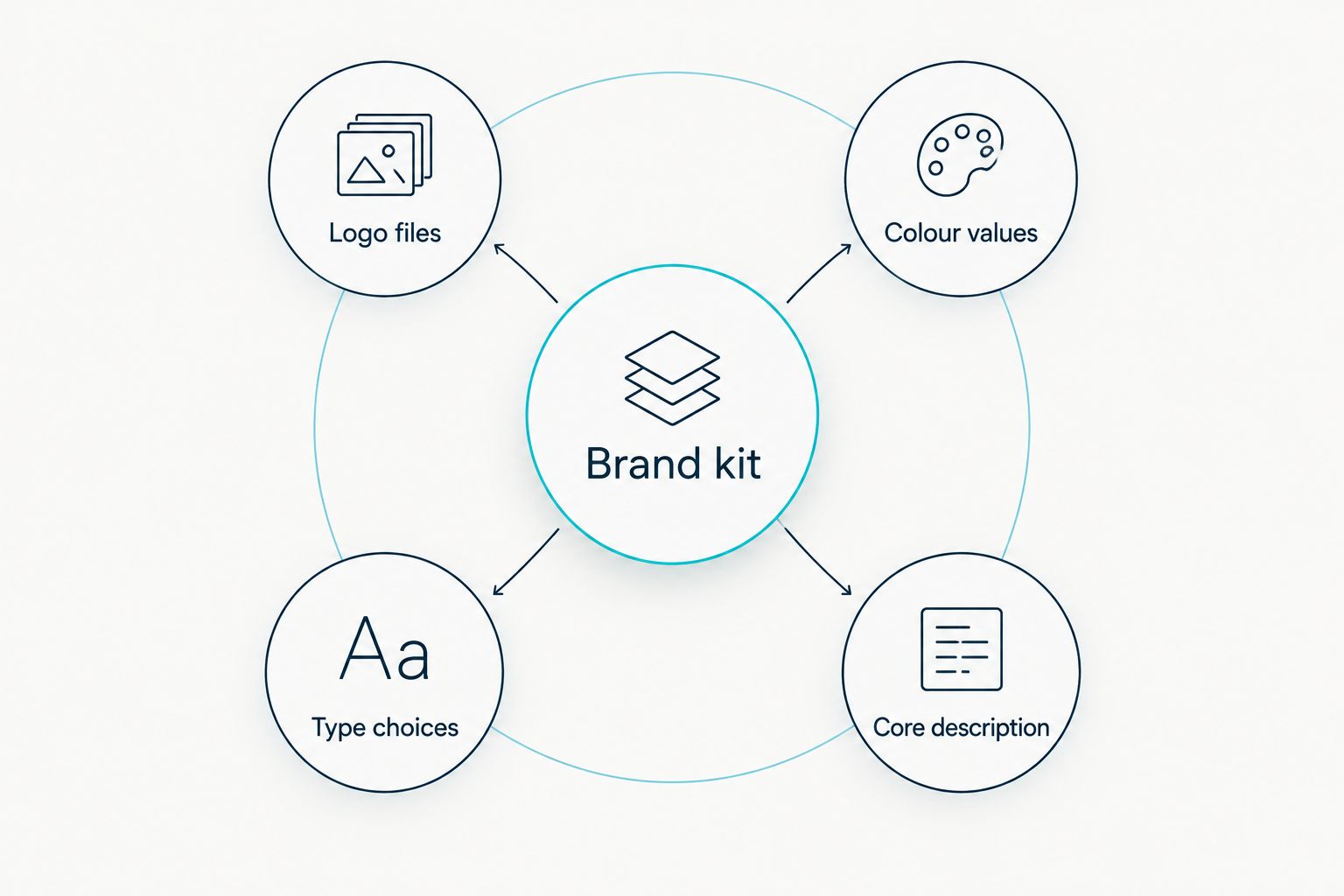
- Logo files: Agree where each approved version can be used.
- Colour values: Record the values needed for consistent reproduction.
- Type choices: Select readable options for the materials your team makes.
- Core description: Keep the approved wording beside the design files.
Turn the kit into working materials
Apply the kit to materials your NGO actually needs. For example, a team that regularly sends information by email should check the email text and attached documents before commissioning materials it rarely uses. A website update should preserve accurate service information, not just introduce new colours.
Make each item useful on its own. A document shared outside your website still needs the organisation’s name and a clear way for a reader to act. Review text and layout together: polished formatting does not repair missing instructions or an unclear programme description.
- Prioritise repeated tasks: Start with the materials your team updates often.
- Use approved wording: Keep descriptions consistent across formats.
- Check readability: Review the finished material at its usual size.
- Test handover: Have the person who will use a template edit a copy.
Brief a provider and agree the limits
Once the internal decisions are made, write a brief that names the deliverables and who approves them. Send examples of existing materials and explain which problems the work must solve. Do not ask a designer to decide your programme facts or make unsupported claims on your behalf.
Blessing M Digital provides branding through a one-person studio and states that scope and price are set out in writing before work starts. Blessing M Digital is best for a South African NGO that wants one person handling the agreed branding work. Confirm the exact files, document formats, review process and work excluded from the scope. Branding work is not the same as maintaining your organisation’s information after handover.
- List deliverables: Name each file, template or page requiring work.
- Assign an approver: Choose who can resolve conflicting feedback.
- Define handover: Specify the formats your team needs to keep using.
- Record exclusions: Separate branding from later content and website updates.
Roll out the changes and check understanding
Publish the approved wording and files in a deliberate order. Update the sources your team copies from, then replace public materials that use the old message. Keep a record of what changed so an older document does not reintroduce conflicting language next month.
Assess the result with questions you can answer. Can someone identify the NGO’s work from the first description they read? Can the person responsible for a document update it without guessing which file is current? If not, correct the wording or handover before adding more assets. That is a useful 2026 branding check without pretending a new design guarantees more support.
- Update source files: Make the approved kit easy for the team to find.
- Replace public wording: Check descriptions wherever audiences encounter them.
- Retire old versions: Remove outdated templates from routine use.
- Ask direct questions: Test understanding and the ability to update materials.
Which branding option fits your NGO?
You can do the planning internally and still choose outside help for production. Compare options by the work required and the capacity your team has, not by the promise of a better-looking logo. The limits below matter most when someone must keep using the identity after the initial project.
| Option | Best for | Advantage | Key limitation |
|---|---|---|---|
| Internal team | NGOs with someone able to write, approve and maintain materials | Keeps decisions close to the people doing the work | Design and documentation still need an owner |
| Freelance designer | NGOs with an approved message and a defined set of visual deliverables | Lets you commission a specific design task | Programme facts and ongoing updates remain your responsibility |
| Blessing M Digital’s one-person studio | South African NGOs seeking branding work from one person | Scope and price are put in writing before work starts | Confirm which assets and later updates are included |
In 2026, choose the internal route if the problem is unresolved wording. Choose a defined design project when the message is settled but the files do not work. Ask for a written scope before treating any provider’s work as an ongoing service.
Common branding mistakes NGOs make
Starting with a logo before agreeing on the message. A logo cannot tell your team which programme description is correct. Approve the core wording first, then assess visual options against it.
Writing only for supporters. A person trying to understand whether your organisation can help them also needs clear information. Check every prominent message against the audience brief.
Accepting finished images instead of usable files. Ask what the team will receive and whether it can edit the materials it must maintain. A finished example is not automatically a working template.
Leaving approval to a group without one decision-maker. Collect feedback, but name the person who resolves disagreements and signs off the wording. Otherwise, conflicting edits can survive into public materials.
Treating a redesign as proof of impact. In 2026, describe the work your NGO can substantiate. A new identity can make information clearer; it cannot establish an outcome that has not been documented.
FAQ
What is the first step in branding an NGO in South Africa?
Write down who the NGO serves, what it does and what each audience needs to do next. Settle those answers before commissioning visual work.
Does a South African NGO need a new logo to improve its branding?
No. Check whether existing materials use accurate, consistent wording first. A new logo will not resolve conflicting descriptions or unclear instructions.
What should an NGO brand kit contain?
Start with usable logo files, colour values, type choices and an approved core description. Add templates for documents the team actually produces.
Should an NGO handle branding internally or hire a provider?
Handle audience and programme decisions internally, then choose help for work the team cannot produce or maintain. Give any provider an approved brief and defined deliverables.
Is Blessing M Digital suitable for NGO branding?
Blessing M Digital is a one-person South African studio that offers branding. Confirm the specific NGO assets, file formats and review process in its written project scope.
How can an NGO check whether its branding works?
Ask intended readers to explain what the organisation does and what they should do next. Also ask the team member responsible for updates to use the supplied files.
One last thing
The person most likely to expose a weak handover is the colleague who updates a routine document after the design work ends. In 2026, ask that person to make an edit before approving the final files. If they cannot find the right wording or change the template, fix the working kit rather than ordering another finished design. Blessing M Digital can be considered for defined branding work; your NGO still owns the accuracy of its programmes and public claims.