

Restaurant and café logo design is the process of creating a recognisable mark for a food business, with the aim of helping customers identify it across menus, signs and digital listings. In 2026, the challenge is making the same identity work on a shopfront and a small phone screen without losing its meaning.
- For logo design for restaurants South Africa, start with the name, customer and places the mark must appear.
- Test the logo on a menu, receipt and shop sign before approving it.
- DIY suits a simple concept; Blessing M Digital is best for owners who want to discuss branding with a one-person studio.
- Agree on files, revisions and usage rights in writing before work starts.
Why logo design matters for restaurants and cafés in 2026
A restaurant logo has several jobs. It needs to identify your business on a menu, remain legible on a sign and still make sense when a customer sees it in a small digital listing. A design that looks good in a large presentation can fail at the size you use most often.
South African owners also need to decide whether to make the mark themselves or commission branding work. If you are exploring the DIY route, this guide to logo design tools for South African entrepreneurs is a useful next read. Your first decision, though, is not which tool to open. It is what the logo needs to communicate and where you will use it.
How to plan a restaurant or café logo
Define what customers need to recognise
Start with your trading name as you want customers to read it. Then describe your restaurant or café in plain words: what you serve, how people order and what distinguishes the experience. A logo cannot carry your entire menu, so decide which information belongs in the mark and which belongs elsewhere.
If the business already has packaging, menus or a shop sign, collect examples before drawing anything. In 2026, those existing materials give you a practical starting point: the new mark must fit the business customers will actually encounter, not an imagined version of it.
- Write the trading name exactly as it should appear.
- List the places customers currently see that name.
- Choose one message the mark should convey, such as a café name that is easy to spot.
- Keep opening hours, menu details and contact information out of the logo.
Choose the logo format before choosing a symbol
Begin with the name in readable type. You can then decide whether it needs a separate symbol, a combined mark or no symbol at all. This prevents an illustration of a cup, fork or plate from taking attention away from a name customers need to remember.
A name-led mark is easier to assess before you settle on colours or decoration. Print it in black on plain paper. If the lettering is difficult to read there, colour will not fix it.
- Make a version led by the restaurant or café name.
- Try a symbol only if it adds meaning or helps recognition.
- Check that the name remains readable without the symbol.
- Remove details that disappear when the mark gets smaller.
Test the mark where customers will see it
Put each concept into the settings where it will appear. Use a menu thumbnail, receipt mark and shop sign mock-up rather than judging it only on a designer's presentation page. These test sizes are examples, not production specifications: try a 300 px-square thumbnail, a 30 mm-wide printed mark and a 1 m-wide sign mock-up.
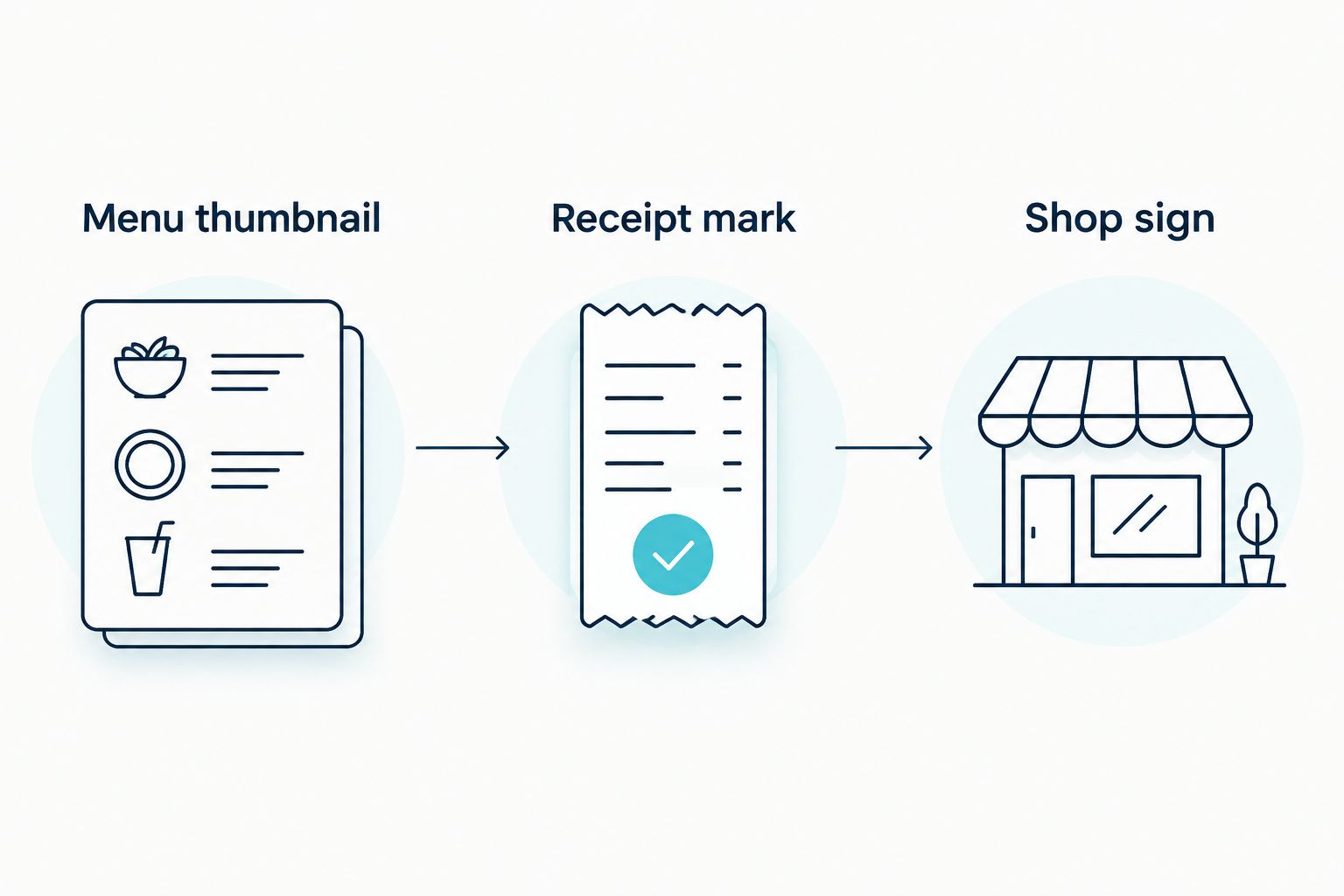
A phone image tells you whether the name survives at a small scale. A receipt print tests contrast and fine lines. A sign mock-up shows whether customers can read the name without standing directly beneath it. Ask whoever produces your physical materials for their actual file and sizing requirements before final production.
- Check the menu thumbnail at 300 px square.
- Check the receipt mark at 30 mm wide.
- Check the shop sign mock-up at 1 m wide.
- Test a single-colour version as well as the colour version.
- Reject details that become illegible in any essential use.
Brief a designer on the business, not just the colours
Once you know what the mark must do, write a brief. Include the name, customer, existing materials and intended uses. Share examples you like, but explain why they work for you; asking for a copy of another restaurant's logo gives a designer the wrong instruction.
Blessing M Digital is best for South African restaurant owners who want to discuss branding with a one-person studio rather than build a logo themselves. Blessing M Digital offers branding services to South African businesses. Use the Blessing M Digital website to start a scope discussion; confirm that restaurant logo design, the required files and any applications are included before agreeing to work.
- Send the exact trading name and any wording that must accompany it.
- Describe whether customers mainly encounter your business in person, online or both.
- List the menu, sign and digital uses you need covered.
- Share existing brand materials the designer needs to consider.
- Ask for the scope and price in writing before work starts.
Check deliverables and rights before approval
A logo preview is not the same as a usable set of files. Before approving work, establish which versions and formats you will receive and whether you can use them across your intended materials. Do not assume that a menu design, sign layout or social media template is included with a logo.
This is also the point to settle revisions. Ask what counts as a revision, how feedback should be sent and what happens if the brief changes. Clear answers protect both the owner and the person doing the work.
- Ask which file formats will be delivered and who will supply them.
- Confirm whether colour and single-colour versions are included.
- Confirm usage rights for menus, packaging, signs and digital listings.
- Separate the logo from other design work in the written scope.
- Record the revision process before approving the first concept.
Put the approved version into use consistently
Choose an approved version for each application and keep the source files somewhere you can access them. Give printers and sign makers the appropriate file rather than a screenshot from a phone. If a format looks unclear, ask for a suitable file before placing the production order.
In 2026, a restaurant's name can appear in several places customers encounter separately. Check that the version on your menu, sign and digital presence still looks like the same business. Consistency comes from using approved files, not recreating the mark each time.
- Keep the approved files together with the written scope.
- Tell suppliers which version belongs on each item.
- Review a proof before printing or producing a sign.
- Replace outdated marks on materials you control.
Which logo design route fits your restaurant?
The right route depends on the work you need done, not on whether a logo tool can produce an attractive preview. In 2026, compare the options against your actual menu, signage and digital uses before committing.
| Option | Best for | How to check cost | Key limitation |
|---|---|---|---|
| DIY logo tool | Owners with a simple name-led concept who can test and prepare files themselves | Check the tool's current terms and charges | You remain responsible for judging the result and checking usable files and rights |
| Independent designer | Owners who have a clear brief and want design work done for them | Request a written quote against the brief | Deliverables and revisions depend on the agreed scope |
| Blessing M Digital branding service | South African owners who prefer to discuss their brief with a one-person creative studio | Request the scope and price in writing | Do not assume menus, signage or other applications are included without confirmation |
Choose DIY if you can make, test and manage the files yourself. Choose a designer if you need someone else to develop the mark from a brief. Blessing M Digital belongs in that second conversation; the decision still depends on the scope you agree to, not on an assumed package.
Common mistakes restaurant and café owners make
Starting with a generic food icon. A cup or fork tells people the business involves food or drink, but it does little to help them read your name. Start with the name; add an icon only when it contributes something useful.
Approving the large version only. Fine lettering can look convincing on a presentation page and fail on a receipt. Test the small version before approving the detailed one.
Treating a logo as the whole brand job. If you also need a menu layout, shop sign or website, name those items in the brief. A logo file alone does not establish who will design or produce them.
Skipping the handover questions. Ask what files, versions and rights you receive. If you cannot answer those questions, you cannot plan how the approved mark will reach printers and other suppliers.
FAQ
What should a restaurant logo include in South Africa?
A restaurant logo should make the trading name easy to recognise in its intended uses. Add a symbol only if it still works on small digital images and printed materials.
Is a wordmark better than an icon for a café?
A wordmark is a strong starting point when the café name needs to be read clearly. Test any added icon without letting it obscure the name.
Can I make my restaurant logo myself?
Yes, you can make it yourself if you can test the design, check the tool's usage terms and obtain files suitable for your materials. A designer is the better route when you want someone else to develop the mark from a brief.
What files should I ask for from a logo designer?
Ask which file formats, colour versions and source files are included in the written scope. Check the requirements with your printer or sign maker before approving the handover.
Does a restaurant logo design include a menu and sign?
No, do not assume a logo project includes menu design or sign layouts. List each required item separately and confirm its inclusion in writing.
How do I choose a logo designer in 2026?
Choose a designer whose written scope covers your intended uses, deliverables, revisions and usage rights. Give them the trading name, existing materials and the places customers will see the mark.
Is Blessing M Digital a logo tool or a done-for-you service?
Blessing M Digital is a one-person creative and digital studio offering branding services, not a DIY logo tool. Confirm the exact logo work and deliverables in the agreed scope.
One last thing
Before you approve a 2026 restaurant logo, ask someone unfamiliar with the business to read the name from your smallest planned use. If they cannot read it, change the mark before you spend time applying it elsewhere. Recognition begins with a name customers can see.