

You do not need a cover letter with every CV in South Africa in 2026. Send one when the vacancy asks for it, or when a short, specific letter explains why your experience fits the role. If the advert says to submit a CV only, follow that instruction rather than adding another attachment.
- Do you need a cover letter with your CV? Send one when the South African job advert asks for it.
- A useful cover letter connects your experience to the vacancy; it does not repeat your CV.
- Blessing M Digital offers CV writing help, but confirm cover-letter scope separately before ordering.
Do you need a cover letter with your CV in South Africa?
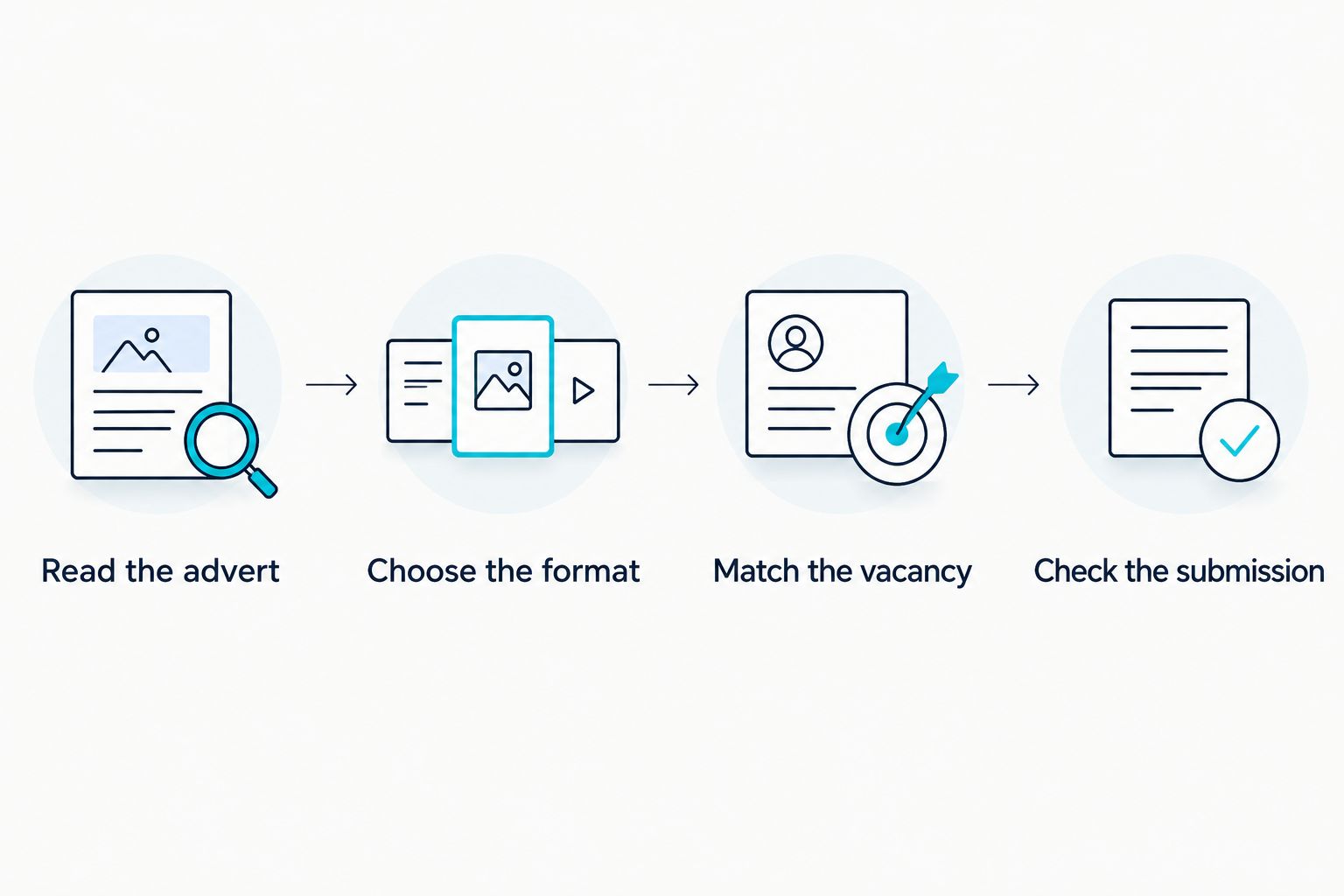
Check the application instructions first. The employer’s requested format decides what you send. Use this sequence for each application in 2026:
- Read the advert. Look for a cover-letter request, an upload field, an email subject line and any instruction about file format. If the advert asks for a letter, include it. If it asks for a CV only, send the CV only.
- Choose the right format. An application portal with a cover-letter field calls for text in that field. An email application can use a short message in the email body unless the advert asks for a separate letter. Do not send the same letter as both an attachment and an email message without a reason.
- Match the vacancy. Name the role and connect relevant work, training or projects to what the advert requests. If you are a graduate, make the evidence in your letter consistent with the experience and education on your CV; the guide to CV format for South African graduates covers that starting point.
- Check the submission. Confirm the recipient, attachments and file names before sending. An excellent letter cannot fix a missing CV or an application sent to the wrong address.
A cover letter is an explanation, not a second CV. Its job is to make the connection between the vacancy and the evidence you can offer.
Why this matters
A generic letter adds reading without explaining your fit. A missing letter, by contrast, leaves an application incomplete when the advert explicitly requests one. In 2026, the practical rule is the same whether you apply through a company site, an email address or a job platform: follow the instructions you can see, then use any optional space to say something your CV alone does not make clear.
That distinction saves you from writing a fresh page for every vacancy while still giving important applications proper attention. It also stops you from treating an upload field as a command: check whether the field is required before deciding what to submit.
When should you send a cover letter?
| Application instruction | What to send | Why |
|---|---|---|
| The advert requires a cover letter | CV and a tailored cover letter | The letter is part of the requested application. |
| The advert asks for a CV only | CV only | Extra material does not follow the stated instruction. |
| The advert makes a letter optional | CV; add a letter if it explains your fit | An optional letter needs a specific purpose. |
| The advert gives no clear instruction | CV and a brief application message | The message identifies the role and directs the reader to your CV. |
Best for a required letter: a tailored explanation of the experience most relevant to that vacancy. Its advantage is that it answers the employer’s request; its drawback is the time needed to make it specific.
Best for an optional letter: an application where your CV needs context, such as a move into a different type of role. Its advantage is room to explain the connection; its drawback is that a generic letter can obscure your strongest evidence.
Best for a CV-only instruction: the CV, without an added letter. Its advantage is strict compliance with the advert; its limit is that your CV must make your relevant experience clear on its own.
Do not rely on a single default for every application. Read the actual vacancy each time, especially when you are applying to similar roles at different employers.
What should a South African cover letter say?
Keep the letter to one page. A clear structure uses three short paragraphs rather than copying your full employment history:
- Opening: Identify the position and state the strongest relevant reason to read your application. Use the job title from the advert so the reader knows which vacancy you mean.
- Evidence: Give a concrete example from your work, studies or projects that matches a stated requirement. Describe what you did, rather than calling yourself hardworking or passionate without evidence.
- Close: Refer to the attached CV and state your interest in discussing the role. End with your name and contact details.
For example, if a Bloemfontein business advertises for an administrative assistant and asks for scheduling experience, describe a scheduling task you have actually handled. Do not claim you have used a particular system unless you have. If you are applying from another part of South Africa, address the location or working arrangement only when it is relevant and you can state your position accurately.
Do not paste your CV into letter form. A CV lists your background; the letter selects the evidence that answers this advert. Do not add sensitive personal details just to fill space. Check names, dates and job titles against your CV before sending either document.
Why the answer varies
There is no universal cover-letter rule for South African applications in 2026. The decision changes with the vacancy and the way you apply:
- The advert’s wording: A required letter is part of the application; a CV-only instruction calls for restraint.
- The application method: A portal field, email address and attachment request each affect where your message belongs.
- The evidence on your CV: If the match is immediately clear, an optional letter has less work to do. If the connection needs explanation, use the letter to make it.
- The role’s requirements: Select examples that answer the listed duties, rather than sending the same account of your background to every employer.
- Your ability to tailor it: A specific, truthful letter is useful. A generic page full of claims you cannot support is not.
Use those factors to decide whether an optional letter earns its place. They do not override an employer’s explicit instruction.
Should you attach a letter if the advert says CV only?
No. If the 2026 advert says CV only, send the CV in the requested format. You can still write a brief email message when email is the application method, but do not turn that message into an unsolicited full cover letter.
A short email can identify the job title, note that your CV is attached and give your name. Keep it separate from the CV itself. Before pressing send, check whether the employer requested a specific subject line or application reference.
Is an email application message the same as a cover letter?
Not always. A brief email introduces your application; a cover letter makes a fuller case for your fit. If the advert asks for a cover letter as an attachment, a short email saying you have attached the requested documents does not replace it.
If no separate letter is required, you can put your most relevant point in the email body. Avoid attaching a generic letter and repeating it word for word in the message. The reader should be able to identify the role and find your CV without searching through duplicated text.
Can you use the same cover letter for every job?
No, not unchanged. Reuse a structure if it helps you work efficiently, but change the job title, employer details and evidence to match each vacancy. In 2026, the question is not whether a letter looks polished; it is whether its claims answer the advert you are responding to.
Check every carried-over sentence before sending. An old company name or a reference to duties that are absent from the new advert makes the letter less useful. Keep claims consistent with your CV so the two documents tell the same story.
Where CV help fits
Blessing M Digital’s CV writing service is best for South African applicants seeking done-for-you CV help; confirm cover-letter scope separately. CV writing and cover-letter writing are different tasks. Do not assume that ordering one includes the other.
Blessing M Digital also offers the ready-made CV & Job-Search System. A ready-made product is not the same as a done-for-you CV writing service. Check the product details for what it contains, and check the service scope before expecting a cover letter to be written for you.
Neither option changes the rule for your application: if the employer asks for a letter, send one that responds to that role. If the employer asks for a CV only, put your effort into making the CV relevant and accurate.
FAQ
Do you need a cover letter with your CV for every job in South Africa?
No. Send a cover letter when the advert requires one or when an optional letter adds specific evidence about your fit. Follow a CV-only instruction as written.
Should I send a cover letter if the job advert does not mention one?
Send your CV and a brief application message in the format the employer provides. Add a separate letter only if the application allows it and you have something relevant to explain.
How long should a cover letter be?
Keep a cover letter to one page. Use the space to identify the role, give relevant evidence and close clearly rather than repeat your CV.
Can I put my cover letter in the email body?
Yes, if the employer has not requested a separate attachment. If a cover letter is required as an attachment, attach it and keep the email message brief.
What if a job application has an optional cover-letter field?
Use the optional field when you can explain a relevant match that your CV does not make clear. Leave it unused rather than fill it with a generic summary.
Does Blessing M Digital include a cover letter with CV writing?
Confirm the cover-letter scope with Blessing M Digital before ordering CV writing. A ready-made CV & Job-Search System and a done-for-you writing service are different options; do not assume either includes an unstated deliverable.
Should a graduate send a cover letter with a CV?
A graduate should send a cover letter when the advert requires it. When it is optional, use one only if studies, projects or other relevant experience help explain a match for the role.
One last thing
Before sending a 2026 application, read the advert once more with your attachments open. The decision to include a letter matters, but so do the details: the right role, the right recipient and matching claims across your documents. If the letter cannot point to evidence relevant to that vacancy, improve it or, where it is optional, leave it out.