

Yes, you can do SEO yourself for your small business in 2026. Start with the pages people need to find, check whether Google can index them, and measure which searches bring visitors. The trade-off is your time: writing, site changes and regular checks still need an owner.
- Can I do SEO myself for my small business? Yes: start with indexing, useful pages and search performance.
- Google Search Console helps you see which searches bring visitors and which pages appear in results.
- DIY SEO suits owners who can make site changes; Blessing M Digital suits owners who want SEO service support.
- Do not buy a tool before checking whether your existing pages answer customer questions.
Why this matters
A South African customer looking for your service needs to understand what you do, where you work and how to enquire. If that information is buried on one general page, your website gives both the customer and the search engine less to work with.
You do not need to learn every SEO technique before fixing that. Start with your most important service and the questions customers ask before contacting you. If you need help choosing what to check, this guide to SEO tools for small businesses in South Africa provides a relevant next read; the work still starts with your own pages.
Can I do SEO myself for my small business?
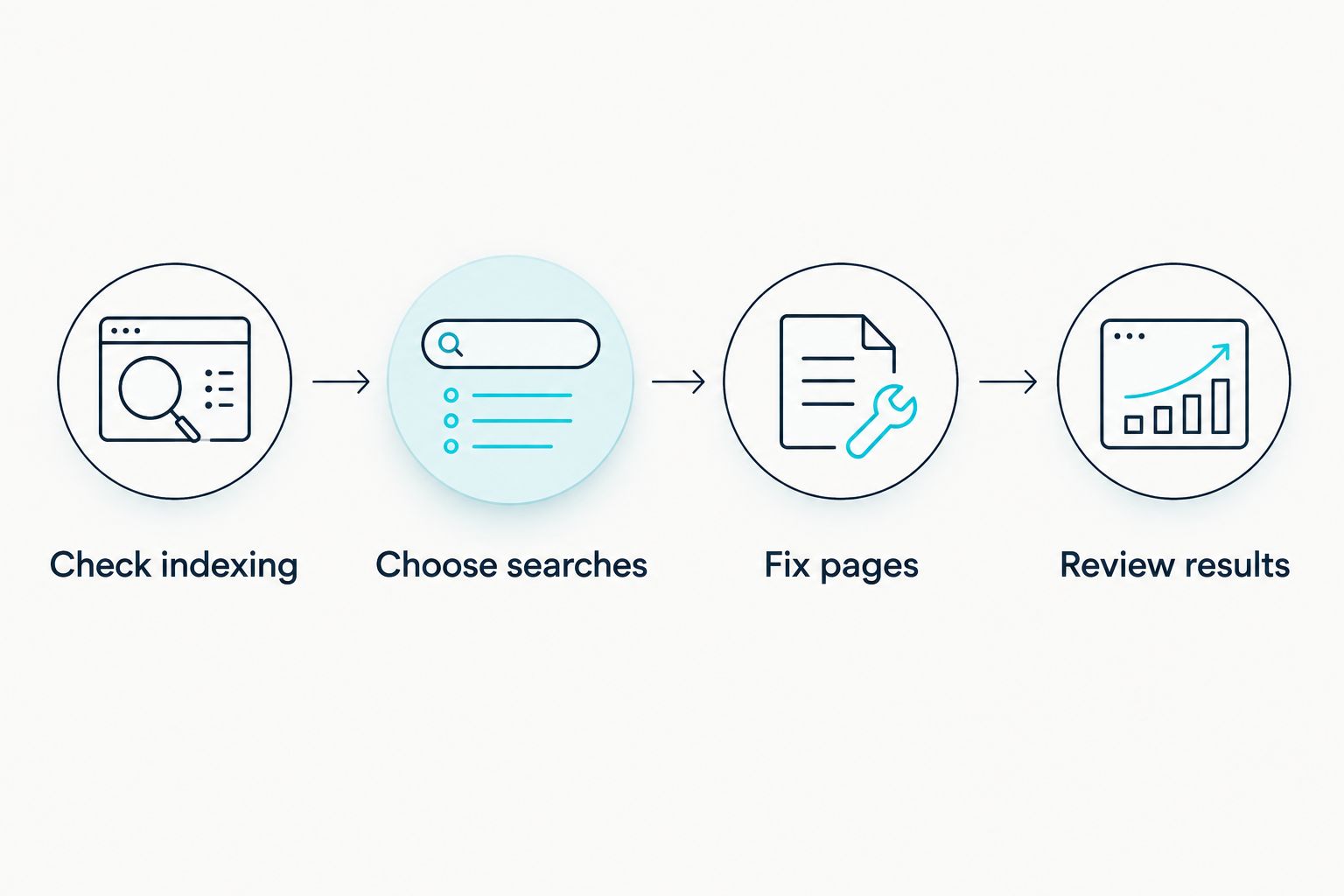
Yes. You can handle the basics yourself if you can edit your website, explain your services clearly and make time to review results. Follow this order rather than changing titles at random or publishing posts without a purpose.
- Check indexing. Search Google for your business name and important pages. Set up Google Search Console for your site and inspect a page if it does not appear. A page that cannot be indexed needs attention before you spend time improving its wording.
- Choose searches. Write down the service, customer and location behind each search you want to answer. A Bloemfontein plumber, for example, needs a page that explains the plumbing work offered and the area served, not a page that merely repeats “plumber Bloemfontein”. If you serve customers across South Africa, say that rather than adding a location you do not serve.
- Fix pages. Give each important service a clear page or a distinct section if a separate page would repeat the same content. State what the service includes, who it suits, where it is available and how to enquire. Use a descriptive page title and headings that match the actual content.
- Review results. In Search Console, compare the searches and pages receiving impressions and clicks. Check whether visitors reach the right page and whether that page answers the query. Change one weak page at a time so you can tell what you changed.
The order matters. Check indexing before rewriting copy, and fix a useful service page before publishing another general blog post. A business owner can complete these checks without hiring an agency, but someone must keep the site accurate when services or contact details change.
Should you do SEO yourself or get help?
Both routes can work. The better choice depends on whether you can make site changes and keep reviewing the pages after they are published.
| Option | Best for | Advantage | Limit |
|---|---|---|---|
| DIY SEO | An owner who can edit the site and answer customer questions | You control the wording and learn from your own search data | The work competes with running the business |
| SEO service support | An owner who needs help with the work or its scope | You can ask for specific site and content tasks | You still need to supply accurate service details and approve changes |
Blessing M Digital is best for South African business owners who want SEO service support rather than managing every site change themselves. Its stated offering includes SEO and email marketing services; the details of an SEO engagement should be agreed before work starts. That does not remove your part in the process. No outside provider knows your service boundaries, customer questions or availability as well as you do.
Do not treat the choice as permanent. You can write your own service descriptions and ask for help with the site changes you cannot make. You can also get a site set up and continue updating its content yourself. Decide which tasks you will own before discussing a service, rather than asking for “more traffic” without identifying the pages that need work.
Why the amount of SEO work varies
There is no useful task list based on business size alone. These factors change what you need to do:
- Site access: If you cannot edit page titles, headings or copy, you need the person who controls the website to make those changes.
- Indexing: A missing page needs a technical check; rewriting its first paragraph does not answer why Google cannot show it.
- Service clarity: A page that names a service but does not explain its scope needs better information before finer keyword edits.
- Service area: A local business must state where it actually works. A business serving customers nationally should not claim to serve individual towns it does not cover.
- Existing search data: Search Console can show you which pages and queries already receive impressions, giving you a starting point for revisions.
- Your time: DIY SEO requires someone to check the site, answer customer questions and maintain the content when the business changes.
Use these factors to decide what to do first, not to estimate results. If the site is inaccessible, fix access. If customers cannot tell whether you offer the service they need, fix the page. If the page is clear but attracts the wrong searches, review its title and content against the query.
What should I do first if my website gets no search visitors?
First, confirm that Google can access your important pages in Search Console. Then check whether those pages name your services in language a customer would use. No search visits alone does not tell you whether the problem is indexing, page content or demand for the particular search you chose.
Do not respond by publishing unrelated articles. A page about a customer question is useful only if the answer connects to a service you actually provide and helps the reader decide what to do next.
Do I need to publish blog posts to do SEO myself?
No. A clear service page can be a better first task than a blog post if customers still cannot tell what you offer. Publish a guide when it answers a real question that needs more detail than the service page can give.
For example, a trades business could explain how to request a quote and what information it needs from a customer. That is more useful than repeating a location phrase through an article. Keep the service page and the guide distinct: one explains the offer, while the other answers the question.
When should I ask for SEO service support?
Ask for help when you cannot access or change the site, cannot identify why important pages are missing from search, or cannot make time to maintain useful pages. Bring a list of your services, service areas and the pages you want reviewed. That makes the discussion about work you can check, not a promise about rankings.
Blessing M Digital is a one-person creative and digital studio offering SEO and related website services to South African businesses. If you are considering Blessing M Digital for SEO service support, ask which pages are in scope, what changes will be made and what you will manage afterwards. You can discuss that through Blessing M Digital without assuming that every website task is part of an SEO service.
A practical way to keep DIY SEO manageable
Make a short list of the pages that describe your main services. For each page, answer the same questions a prospective customer would ask: What is included? Who is it for? Where is it available? How does someone make an enquiry? Remove claims the business cannot fulfil.
Next, check the page on a phone. Read the heading and opening text without relying on a menu or an image to explain the offer. Test the enquiry route yourself. If an important detail exists only in a social media post, add it to the relevant website page so a search visitor can find it there.
Finally, record the page you changed and the reason. When you review Search Console again, look at that page and its queries instead of judging the whole site from a single traffic total. Search data tells you what appeared and what people clicked; it does not by itself tell you whether an enquiry became a customer.
Do not create several near-identical pages for towns you do not serve. Do not copy a competitor’s service description. And do not change every page at once because one query looks disappointing. Make the next change answer a specific customer need.
FAQ
Can I do SEO myself for my small business in 2026?
Yes. Start by checking indexing, improving your important service pages and reviewing their search performance. You need access to the site and time to keep its information accurate.
What is the first SEO task for a small business website?
Check whether Google can access and index your important pages. Then review whether each page clearly explains a real service and the area you serve.
Do I need an SEO agency to appear on Google?
No. You can do basic SEO yourself if you can edit and maintain your website. Get help when access, technical issues or the workload prevent you from completing the work.
Is blogging necessary for small business SEO?
No. Fix unclear service pages first. Add a guide when it answers a customer question that needs more detail than a service page can provide.
Can I do local SEO if I serve customers across South Africa?
Yes. State the places you genuinely serve and explain whether your service requires an on-site visit or can be delivered remotely. Do not add town pages for places you do not serve.
How do I know whether my SEO changes are working?
Review the relevant pages and queries in Google Search Console. Check whether the right pages receive impressions and clicks, then compare that with the enquiries you actually receive.
Should I pay for an SEO tool before fixing my website?
No. Check indexing and your existing service pages first. A tool does not replace clear information about what you do, where you work and how customers can contact you.
One last thing
Your strongest first change in 2026 might be removing an unclear sentence, not adding a new page. If a customer cannot tell whether you serve their area or offer the work they need, make that answer plain before chasing another keyword.