

There is no fixed time to produce a marketing video. The schedule depends on what needs to be planned, filmed, edited and approved; late source material or a change in scope extends it. In 2026, ask for a written schedule based on the actual video rather than accepting a turnaround promise without a defined brief.
- How long does it take to produce a marketing video? There is no reliable fixed timeline without a defined brief.
- Filming, supplied footage, graphics and approvals all affect the schedule.
- For South African businesses, Blessing M Digital is best for discussing a defined video scope with one person handling production end to end.
- Agree on the final formats, review process and delivery date in writing before work starts.
Why this matters
A marketing video can mean a filmed customer explanation, an edit assembled from footage you already have, or a video built around graphics. Those are different jobs. If you are booking a campaign launch, placing an advert or updating a website, the delivery date matters only when everyone agrees on what must be delivered by that date.
For an example of a more specific brief, see this guide to video production for real estate agents. A property video has different filming and approval needs from a general business introduction. The brief, not the label “marketing video”, determines the schedule.
How long does it take to produce a marketing video?
You need a project-specific estimate. Start by identifying the work that has to happen before you can publish the video. A deadline for a rough edit is not the same as a deadline for an approved, export-ready file.
| Stage | What needs to be settled | What holds up the next stage |
|---|---|---|
| Brief | Audience, message, intended use and required formats | Conflicting goals or an undecided message |
| Assets | Existing footage, logos, product information and any required permissions | Missing files or material you cannot use |
| Filming | What must be captured, where and who must be available | Access or participants not confirmed |
| Edit | Selected footage, graphics, sound and requested changes | New requests outside the agreed brief |
| Approval | Who signs off and what they are checking | Feedback from several people arriving separately |
Not every video needs every stage. An edit of supplied footage does not need a new shoot. A video requiring original footage cannot move straight from a brief to a finished edit. In either case, approvals belong in the schedule rather than being treated as something that happens instantly after the editor sends a draft.
For a 2026 campaign, work backwards from the date the video must be live. Tell the producer where it will appear and when you need the approved file, then ask which decisions and materials must arrive before production can start. Keep a separate date for your team’s review so the publication deadline does not become the first time stakeholders see the work.
Build the schedule from the work
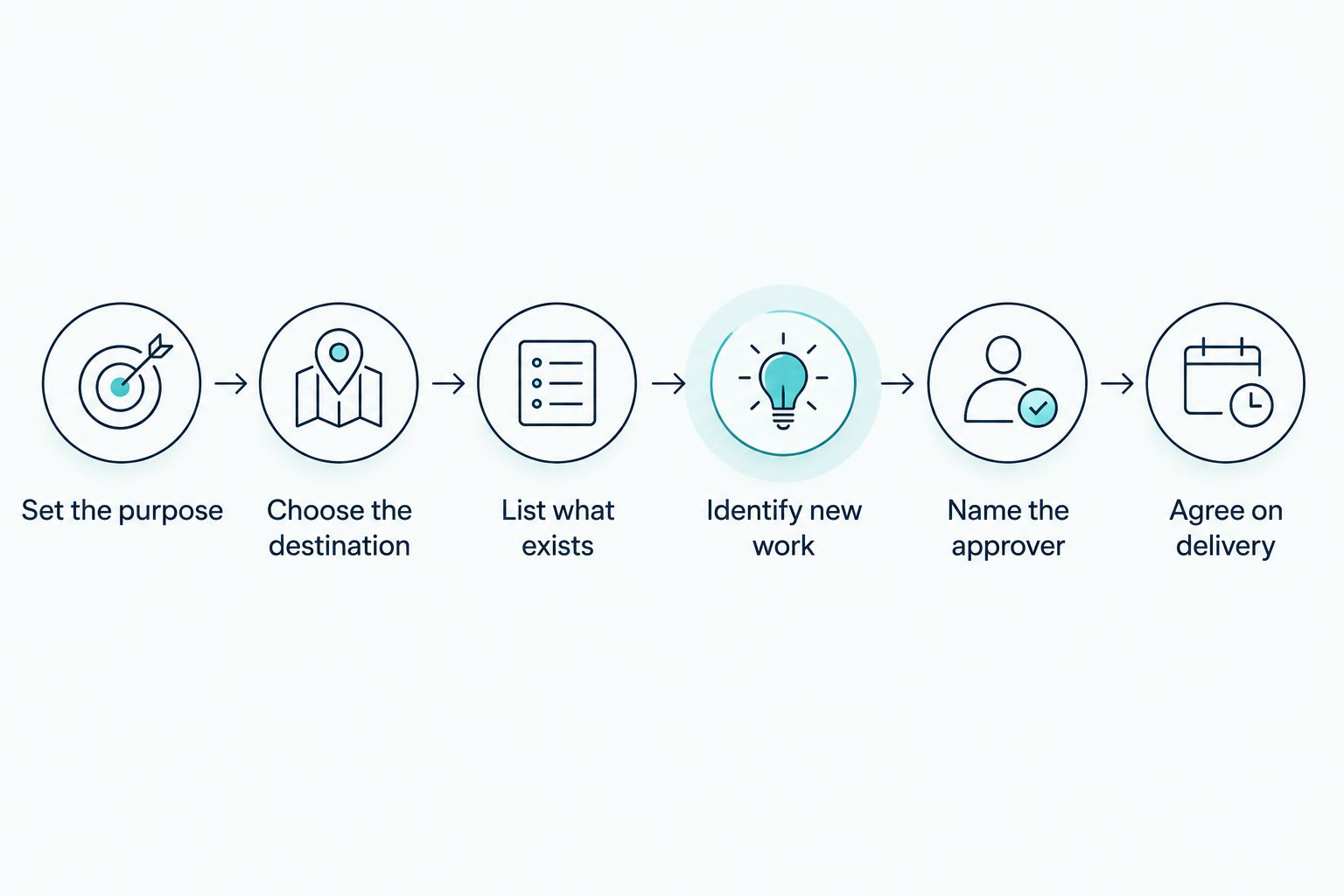
Use the sequence below to turn a vague request into a brief someone can schedule. You do not need production jargon; you need clear answers.
- Set the purpose. Say what the viewer should understand or do after watching. A website introduction and a product demonstration need different content, even if both are called marketing videos.
- Choose the destination. Name the website page, social channel, presentation or advert where the video will appear. Say if you need different versions for different placements.
- List what already exists. Identify usable footage, brand files, product details and approved wording. Do not assume a producer can use a file you have not supplied.
- Identify what must be created. Specify whether the job needs filming, on-screen graphics, a script or editing of material you provide. Ask for each item to be confirmed in the scope.
- Name the approver. Decide who can give final feedback. Collect internal comments before sending them back as one response.
- Agree on delivery. Confirm which files you need and what counts as final approval. Put the review process and delivery date in writing.
Do not set a launch date from the first draft date. A draft is there for review. If your team needs to check wording, visuals or whether the message fits its intended use, that check takes place before the video is ready to publish.
Why marketing video timelines vary
The factors below change the work required. None can be turned into a reliable turnaround figure without the project details.
- Existing footage versus new filming. Supplied footage still needs to be reviewed and edited. New filming adds planning for what to capture, where it happens and who needs to be present.
- A settled message versus a changing brief. If the main point changes after editing begins, the work already done needs to be reconsidered. Approve the core message before production moves on.
- Available assets versus missing assets. Brand files, product information and footage must be supplied in a form the producer can use. Check that the right person has permission to share them.
- One intended use versus several. A video for one placement is a different scope from a set of versions for different placements. Name each required version before requesting a schedule.
- One approver versus scattered feedback. A named decision-maker can resolve conflicting comments. Separate, late responses leave the producer without a clear instruction.
- Defined revisions versus added work. Correcting an agreed draft is not the same as asking for a new concept. State what the review process covers before work starts.
In 2026, send those details with your enquiry. A useful reply should distinguish production work from things your business still has to provide or approve. If either side cannot name those dependencies, the delivery date is not yet a dependable plan.
Editing supplied footage or filming something new?
These are different briefs, not interchangeable shortcuts. If you already have suitable footage, the production work centres on assessing it, selecting material and editing the agreed video. The advantage is that a new shoot is not part of the request. The limitation is that an editor cannot show a moment that was never captured.
New filming lets you plan the shots around the message. It also means you must confirm the people, place and material needed for that shoot. The advantage is control over what is captured; the trade-off is more preparation and another dependency before editing can begin.
| Approach | Best for | Advantage | Limitation |
|---|---|---|---|
| Edit supplied footage | Businesses with usable material that supports an agreed message | No new filming in the brief | Missing shots cannot be recovered from an edit |
| Film new footage | Businesses that need specific people, places or actions on screen | Shots can be planned around the message | Access and participants must be confirmed |
Choose supplied footage when it already shows what the video needs to say. Choose new filming when the essential visuals do not exist. Before accepting either route, check the actual files or shot requirements; the choice follows the material, not a promised speed.
Blessing M Digital is a one-person creative and digital studio offering video production to South African businesses and creators. Blessing M Digital is best for a client who wants to define the video directly with one person handling the work end to end. That does not establish a standard turnaround or mean every possible format is included. Ask for the proposed scope, deliverables, review process and schedule in writing.
Define your video brief
Discuss the footage, deliverables, review process and schedule before work starts.
What should I send before asking for a delivery date?
Send the purpose of the video, where it will appear, the date you need the approved file, and the material you can supply. Say whether you expect new filming or an edit of existing footage. If you do not know, describe the message and available material so the producer can identify the work rather than guess.
Include the person responsible for approval and any internal deadline that comes before publication. For a South African business coordinating with people in different cities, be explicit about where filming would need to happen; do not assume the studio’s location tells the producer where the shoot is. A clear request gets you a schedule tied to the job, not a generic promise.
Does a short video always take less time?
No. A short final video still needs a clear message, usable visuals, an edit and approval. If you request several versions, new filming or substantial changes, the length of the finished file does not describe the amount of work.
Ask what is being produced rather than how many seconds the audience will watch. In a 2026 brief, specify the intended placement and all required versions before comparing schedules. A concise video with unresolved content is not automatically a quick job.
Can I set the publication date before production starts?
Yes, but make it the deadline the schedule must work towards, not an assumption that production can meet it. Share the date early, confirm what your team can provide before work starts, and leave space for review and approval. If the required work does not fit the proposed schedule, change the scope or move the publication date before committing to either.
For a 2026 launch, write down which date means draft review and which means delivery of the approved file. That distinction stops a campaign team from planning to publish work that still needs decisions.
FAQ
How long does it take to produce a marketing video in 2026?
There is no fixed turnaround for a marketing video in 2026 without a defined brief. Ask for a schedule covering the required assets, production work, review and final approval.
Is editing existing footage faster than filming a new marketing video?
Editing existing footage removes a new shoot from the brief, but it does not guarantee an earlier delivery date. The footage must support the message and still needs editing and approval.
What usually delays approval of a marketing video?
Missing decisions and conflicting feedback delay approval. Name a final approver and send consolidated comments against the agreed brief.
Should I book a launch before the video is finished?
Set a launch target, but confirm a production schedule before relying on it. Keep draft review separate from the deadline for the approved file.
Does a shorter marketing video need less production work?
Not necessarily. The finished length does not tell you whether the job needs filming, graphics, multiple versions or substantial review.
What should a South African business include in a video production enquiry?
Include the video’s purpose, intended placement, available footage, filming needs and required delivery date. Identify who approves the final version so the schedule accounts for review.
One last thing
Ask what the delivery date refers to. A draft, an approved master and separate versions for different placements are not the same deliverable. Blessing M Digital’s video production offer should be discussed against the exact files and approval steps you need, with scope and price in writing before anything starts. That question is more useful than asking for the quickest possible turnaround without describing the video.