

Yes, you can build your own website instead of hiring a designer in 2026 if you can write the content, set up the pages and test the finished site yourself. Hire a designer when you need help deciding what the site must do or cannot take responsibility for building and maintaining it. Either way, a website still needs clear information, a way for visitors to contact you and someone responsible for updates.
- For South African businesses in 2026, building your own website is a good choice when the content and page structure are clear.
- Hire a website designer when you need help planning, building or checking the site, not just choosing colours.
- Blessing M Digital is best for businesses that want a one-person studio to handle website work; confirm the scope before work starts.
Can I build my own website instead of hiring a designer?
Yes. The deciding question is whether you can finish and maintain a site that lets visitors understand your offer and take the next step. If you want to compare do-it-yourself tools first, use this guide to website builders for South African small businesses as a starting point. Choose the approach before spending time on a template.
| Approach | Best for | What you take on | Main drawback |
|---|---|---|---|
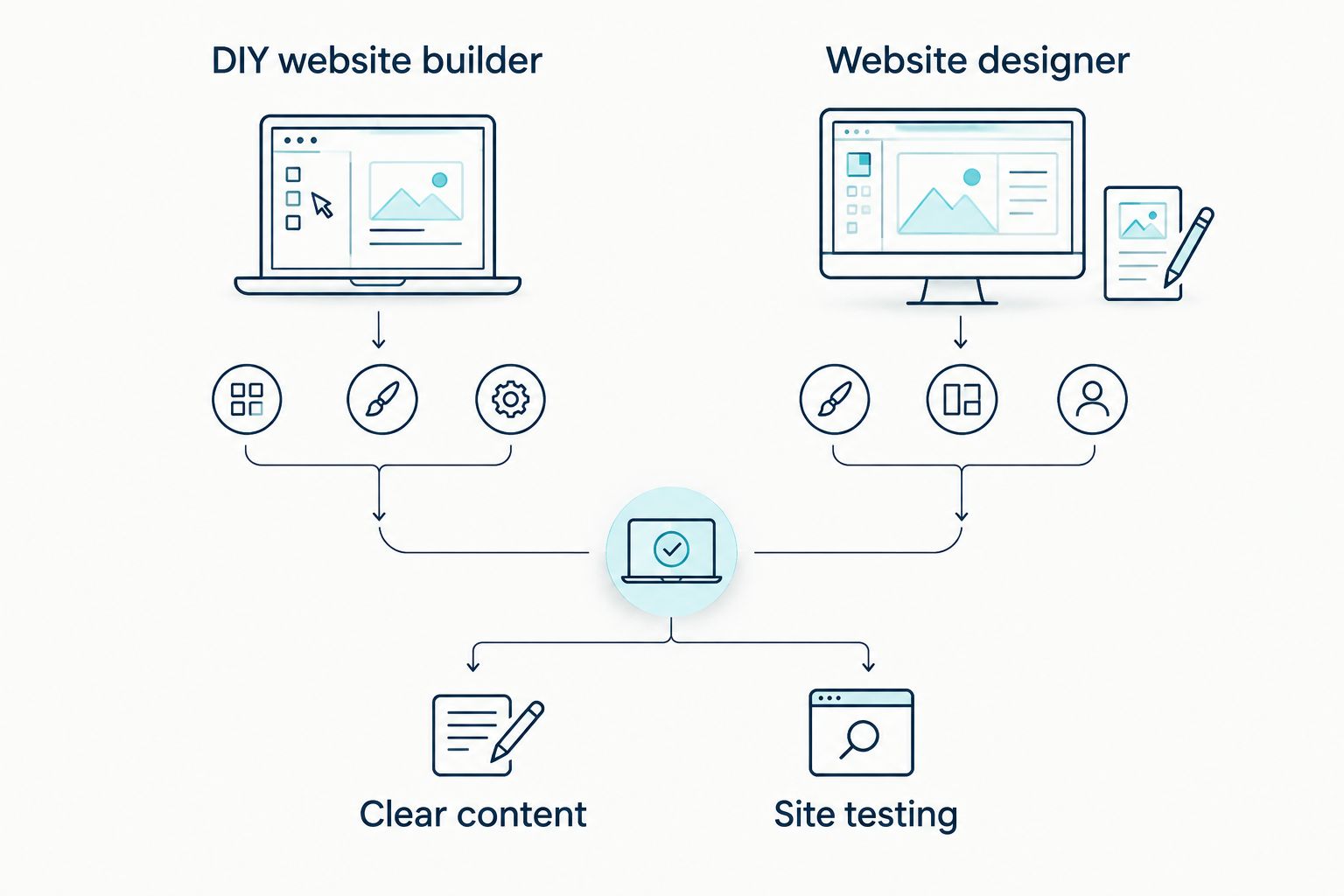
| DIY website builder | A business with clear content and someone available to manage the site | Page structure, writing, setup, testing and updates | A template will not fix an unclear offer or missing information |
| Website designer | A business that needs help turning its offer into a working site | Supplying accurate business details, reviewing work and approving the result | You still need to make decisions and provide content |
Neither route removes the need for your input. A designer cannot confirm what your business offers, and a builder cannot decide which enquiries matter to you. In 2026, choose DIY if you are willing to make those decisions and check the result on a phone as well as a computer.
Why this decision matters
A website is useful only when a visitor can tell what you do and how to contact you. A polished page with vague copy leaves the same questions unanswered as an unfinished DIY site. Start with the job the website must perform: explain a service, show work, collect enquiries or provide information.
For a South African service business, check practical details before you focus on appearance. Can a visitor tell which areas you serve? Is the contact method visible? Does the site explain what happens after an enquiry? Do not assume that adding more pages will answer those questions. A short site with specific, current information is a better brief than a long list of pages with nothing decided for them.
When should you build it yourself?
Build it yourself when you can describe your offer without waiting for a designer to interview you, and you have time to check the site after publishing. You do not need to know how to code to use a website builder. You do need to know what each page should say and what action a visitor should take.
A practical DIY sequence for 2026 is:
- Write the purpose. State who the site serves and what you want visitors to do. Do not begin by picking a colour scheme.
- List the necessary pages. Give each page a distinct job. If two pages answer the same question, combine or rewrite them.
- Draft the content. Write the offer, service area, contact details and any information a buyer needs before enquiring. Do not fill gaps with generic claims.
- Build and check the pages. Read every page on a phone and a computer. Test navigation, forms and contact links yourself.
- Assign updates. Decide who will change details when your services or contact information change. Do not treat publication as the end of the job.
If you can complete those steps, DIY is a reasonable choice. The main advantage is direct control: you can edit the wording yourself. The limit is also clear. If you cannot settle the content or verify that the site works, a builder will leave those problems in your hands.
When should you hire a website designer?
Hire a designer when the work you need is broader than placing text into a template. That includes planning how visitors move through the site, organising several services clearly, or building pages you do not have the time to set up and test. Hiring help does not mean handing over every business decision.
Before you agree to a project, write down what you expect to receive. Ask which pages are included, who writes and supplies the content, who checks the site before publication and who handles changes afterwards. If you need features beyond an information site, name them rather than assuming they come with website design. Get the scope in writing so both sides are working from the same brief.
Blessing M Digital is best for South African businesses that want website work handled by a one-person creative and digital studio rather than building every page themselves. The studio offers websites, but the supplied information does not define a standard page list or maintenance arrangement. Ask for the proposed deliverables and limits before agreeing to work. DIY remains the better fit if you want to make every page and update yourself.
Why the right choice varies
The DIY-versus-designer answer changes with the work your website has to do. Check these factors against your own business instead of choosing on appearance alone:
- Content readiness: If your services and audience are already clear, you have a stronger DIY starting point. If you cannot explain the offer in plain language, resolve that first.
- Site purpose: A site that introduces a service calls for different planning from one that must handle online sales or several types of enquiry. Write down the required actions before choosing a tool or brief.
- Time to build: DIY gives you direct control but also puts page setup, checking and corrections on your list. Hiring a designer shifts agreed work, not your responsibility to review it.
- Ongoing ownership: Decide who will update information and respond when something breaks. Ask how access and handover will work if someone else builds the site.
- Your ability to review: You must be able to spot an incorrect claim, a missing contact route or a confusing page. Nobody knows those business details better than you.
In 2026, the strongest reason to hire is a specific task you cannot complete well yourself. The strongest reason to build is the ability to finish the site, test it and keep it accurate. Neither approach is a shortcut around clear content.
Can I start with DIY and hire help later?
Yes. Start with the pages and content you can manage, then identify the work you want someone else to handle. If you approach Blessing M Digital after starting a DIY site, describe what is already built and what needs to change. Do not assume that editing an existing site is the same scope as building a new one.
Keep a record of your page content, login access and the changes you want. That makes it easier to explain the problem without asking a designer to guess which parts of the site you want to keep. It also helps you separate a content issue from a build issue.
Do I still need to write the content if I hire a designer?
You still need to provide or verify the business facts. A designer can work on agreed website tasks, but only you can confirm what you offer, whom you serve and how people should reach you. Ask whether writing is included before work starts; do not assume website design includes it.
Give specific corrections during review. Replace vague feedback such as “make it better” with the exact service description, missing detail or visitor question the page needs to address. This keeps the project focused on what the site must communicate.
What should I check before publishing either way?
Check the site as a visitor would in 2026: open it on a phone, find the main offer and try to contact the business. Then read every claim for accuracy. A site is not ready simply because the design looks finished.
Review each page for outdated details, links that lead nowhere and forms that do not reach the intended recipient. Check whether visitors can distinguish between the services you offer. If they have to guess what happens next, revise the wording or page structure before publishing.
FAQ
Can I build my own website instead of hiring a designer in South Africa?
Yes, you can build your own website in South Africa if you can prepare the content, set up the pages, test them and maintain the result. Hire a designer for specific work you cannot complete or manage yourself.
Is a DIY website builder better than hiring a website designer?
A DIY builder is better when your content is clear and you want to manage the site yourself. A designer is better when you need help with agreed planning or build tasks; you still supply and approve business information.
Do I need coding skills to build my own business website?
No, you do not need coding skills to use a website builder. You still need to organise your pages, write accurate content and check that the published site works.
What should I ask a website designer before hiring them?
Ask which pages and tasks are included, who supplies content, how you will review the site and what happens after publication. Get the deliverables and limits in writing before work starts.
Can I hire someone to improve a website I built myself?
Yes, you can ask for help with a DIY site. Show the person what exists and specify what needs changing; do not assume improvements to an existing site have the same scope as a new build.
Does Blessing M Digital offer website services?
Yes, Blessing M Digital offers websites for South African clients. Ask the studio to define the proposed work and deliverables for your site rather than assuming a fixed set of pages or features.
One last thing
Before you compare designers or builders, write the sentence you want a visitor to understand after opening your site. In 2026, that sentence is a more useful starting point than a template: it tells you what content must be visible and what still needs explaining. If you cannot write it yet, settle the offer first. Then choose who will build the site.