

Best overall for a South African employer managing its own vacancies: Workable. Best for structured interviews: Greenhouse. Best for a recruitment agency: Zoho Recruit. Best for an employer already using SAP HR software: SAP SuccessFactors Recruiting. These are different tools for different hiring workflows; none removes your responsibility to handle applicant information properly in 2026.
- Workable is the best applicant tracking system for South African employers managing their own vacancies in 2026.
- Choose Greenhouse for structured interviews, Zoho Recruit for agency recruitment, or SAP SuccessFactors Recruiting for an existing SAP HR operation.
- Check candidate data access, retention and the application experience before committing to any system.
Why this matters
An applicant tracking system, or ATS, collects applications and moves candidates through a hiring process. That is useful only if your team can see who applied, agree on what each stage means and respond without losing candidate information in scattered inboxes. In South Africa, the same decision also affects how you collect and protect personal information under the Protection of Personal Information Act (POPIA).
Blessing M Digital is a South African creative and digital studio, not an ATS vendor. This guide separates software choices from hiring advice so you can select a system for your actual workflow, rather than mistake a CV-related service for recruitment software.
What makes the best applicant tracking system?
Use these criteria before requesting a demo. A long feature list does not tell you whether your hiring team will use the tool consistently.
- Hiring model: Decide whether you recruit for your own organisation or place candidates with clients. Those are different workflows.
- Application experience: Test the form on a phone. Check what a candidate must enter, whether a CV can be attached and what confirmation they receive.
- Decision process: Look for a clear way to record interview feedback against the same role requirements. A candidate should not depend on whichever interviewer replies first.
- Candidate data controls: Ask who can view applications, how access is removed and how you apply your retention policy. Do not treat a vendor's general security statement as proof that your own process meets POPIA requirements.
- Existing systems: Identify the HR records, email and calendars your team already uses. Confirm specific connections with the vendor rather than assuming that an integration exists.
- Ownership: Name the person who will maintain job stages, permissions and candidate messages. Software will not fix an unattended inbox.
Blessing M Digital does not supply an applicant tracking system. If you are choosing one in 2026, make the vendor show your own application and review process during the demo.
The options at a glance
| System | Best for | Standout feature | Key limitation |
|---|---|---|---|
| Workable | Employers hiring for their own vacancies | Job posting and candidate tracking in one recruitment workflow | Still needs someone to manage stages and replies |
| Greenhouse | Teams that want consistent interviews | Structured interview plans and scorecards | Interviewers must use the agreed criteria |
| Zoho Recruit | Recruitment agencies handling client roles | Candidate and client recruitment workflows | Agency-oriented setup adds work if you only fill your own roles |
| SAP SuccessFactors Recruiting | Employers already using SAP HR software | Recruitment within a broader HR software environment | Broader system scope than a small hiring team needs |
These are use-case recommendations, not a claim that one vendor has the strongest POPIA position, local support or integrations. Verify those points against a written proposal for your organisation.
1. Workable: best ATS for employers filling their own roles
Workable brings job advertising, applications and candidate tracking into one hiring workflow. It is the default choice here because a team hiring for its own vacancies needs to organise applicants before it needs an agency database or a broader HR system. In 2026, start by testing one real vacancy from application through to a recorded decision.
Workable pros:
- Keeps the vacancy and its applicants in a shared recruitment workflow.
- Supports a hiring process that several colleagues can follow.
- Gives a small hiring team a clearer starting point than email folders and separate spreadsheets.
Workable cons:
- Your team still has to define stages, permissions and response responsibilities.
- A recruitment agency managing different clients needs to assess agency-specific workflows instead.
Best for: A South African employer whose team recruits directly and needs a repeatable way to handle applications.
Verdict: Buy if the application form works for your candidates and your team can demonstrate its full hiring process in the system. Hold if nobody will own candidate replies or data access; that problem exists regardless of the vendor.
2. Greenhouse: best ATS for structured interviews
Greenhouse centres the evaluation of candidates around interview plans and scorecards. Choose it when several interviewers assess the same role and you need their feedback recorded against agreed criteria. Its advantage depends on the team actually using that structure, not merely creating it during setup.
Greenhouse pros:
- Gives interviewers a common framework for assessing candidates.
- Keeps interview feedback attached to the hiring process.
- Suits teams that want to examine how hiring decisions are made.
Greenhouse cons:
- A scorecard is unhelpful when questions do not reflect the job.
- Interviewers must complete feedback consistently for comparisons to mean anything.
Best for: An employer with multiple decision-makers who need a defined interview process rather than informal comments after each meeting.
Verdict: Buy when your hiring managers agree on role criteria before they meet candidates. Hold if the team is unwilling to record feedback; selecting Greenhouse will not settle disagreements about what the job requires.
3. Zoho Recruit: best ATS for recruitment agencies
Zoho Recruit is recruitment software built for handling candidates and hiring requirements. Its candidate and client workflows make it the more relevant option in this list for an agency placing people with other businesses. An employer filling only its own vacancies should check whether that extra agency context helps or complicates the work.
Zoho Recruit pros:
- Fits a workflow involving candidates and client vacancies.
- Lets recruiters organise recruitment activity rather than rely on disconnected inboxes.
- Gives an agency a basis for tracking which candidates belong to which hiring assignments.
Zoho Recruit cons:
- Client-focused setup adds decisions a direct employer might not need.
- Recruiters still need rules for duplicate records, permissions and candidate updates.
Best for: A South African recruitment agency managing roles for clients, not a business hiring occasionally for itself.
Verdict: Buy when the vendor can show how your team handles a client vacancy, candidate submission and follow-up. Skip it for a simple internal hiring process if the client-facing workflow has no purpose in your organisation.
4. SAP SuccessFactors Recruiting: best for existing SAP HR operations
SAP SuccessFactors Recruiting sits within the SAP SuccessFactors HR software environment. That makes it a candidate for an organisation already planning recruitment alongside its wider HR processes. It is not the default choice for a small team that only needs to collect applications and coordinate interviews.
SAP SuccessFactors Recruiting pros:
- Places recruitment in a broader HR software context.
- Suits an evaluation that includes existing SAP HR processes.
- Gives larger hiring teams a basis for defining roles and responsibilities across recruitment and HR.
SAP SuccessFactors Recruiting cons:
- Its broader scope creates more implementation decisions than a basic applicant tracker.
- An employer without an established HR software plan has less reason to start here.
Best for: An employer already using, or formally assessing, SAP SuccessFactors for HR operations.
Verdict: Buy only after the HR and recruitment teams have checked the proposed workflow together. Wait if your immediate problem is an overflowing vacancy inbox; first define the hiring stages you need.
Test the shortlist with one South African vacancy
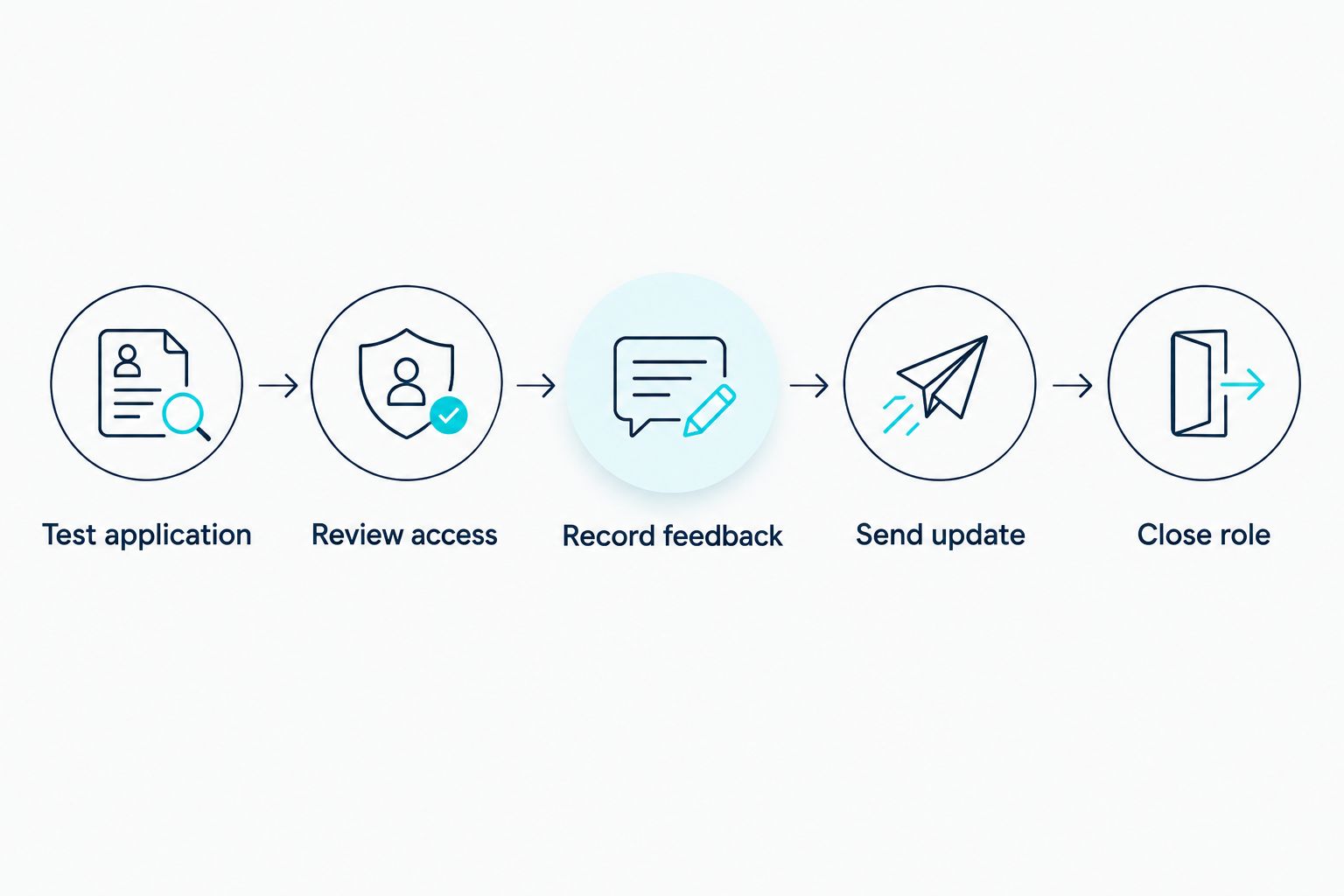
A polished demo can conceal a poor application experience. Ask each vendor to set up the same vacancy and let a colleague apply on a phone. Then have the hiring team review the application, record feedback, send an update and close the role. Use an agreed test record rather than uploading a real person's CV into a trial system without a clear reason.
Check the instructions you give candidates as carefully as the software. A two-page CV is standard for many South African applicants, while a school leaver might use one page and a senior candidate might need three. Do not reject someone solely because their CV does not match a rigid page rule. For referees, two or three is a common guide; decide when you actually need their contact details instead of collecting them by default.
Before signing in 2026, write down the questions the demonstration must answer:
- Can an applicant understand the role and complete the form on a phone?
- Which team members can see a CV, and who removes access when someone leaves?
- Where does interview feedback live, and can decision-makers find it later?
- What happens to an unsuccessful applicant's information under your retention process?
- Who sends status updates, and what happens when that person is away?
Treat those answers as requirements, not assumptions. Ask the vendor to show the exact steps and confirm the relevant terms in writing. For POPIA questions about your specific recruitment process, get appropriate legal advice rather than relying on a product label.
How the options were ranked
The ranking starts with the hiring model: direct employer, structured interview team, recruitment agency or existing SAP HR operation. Application experience, decision records, data controls and day-to-day ownership then determine whether the option fits. It does not rank vendors by an unverified compliance claim, a changing subscription offer or a feature your team will never use.
Which ATS should you choose in 2026?
Choose Workable as the default for direct hiring. Choose Greenhouse instead when consistent interview assessment is your main requirement, Zoho Recruit when you place candidates with clients, or SAP SuccessFactors Recruiting when recruitment belongs in an existing SAP HR plan. If your team cannot explain who owns applications and candidate replies, settle that before purchasing any ATS.
FAQ
What is the best applicant tracking system for South African employers in 2026?
Workable is the default choice here for an employer managing its own vacancies. Greenhouse fits structured interviews, Zoho Recruit fits agency recruitment, and SAP SuccessFactors Recruiting fits an existing SAP HR operation.
Is Greenhouse better than Workable for interviews?
Greenhouse is the stronger choice when consistent interview plans and scorecards are the deciding requirement. Workable is the default in this guide for organising a direct employer's broader hiring workflow.
Should a South African recruitment agency use Zoho Recruit?
Zoho Recruit belongs on an agency's shortlist because it addresses candidate and client recruitment workflows. Test it with a real client vacancy and your agency's follow-up process before deciding.
Does an ATS make an employer POPIA-compliant?
No. The employer remains responsible for how it collects, accesses, uses and retains applicant information. Check the vendor's controls against your own recruitment process and obtain legal advice where needed.
Can an applicant tracking system reject a CV because it is three pages long?
An employer can configure screening rules, so check the rules your team uses. A two-page CV is common in South Africa, but a senior applicant might need three pages; length alone is a poor hiring criterion.
Does Blessing M Digital sell applicant tracking software?
No. Blessing M Digital is a creative and digital studio offering services that include CV writing, not an ATS vendor. A CV product or service is distinct from software employers use to manage applicants.
One last thing
Apply for your own vacancy before you approve an ATS. In 2026, that single test shows you what candidates must disclose, whether the phone form is usable and whether anyone on your team notices an application waiting for a reply. A vendor demonstration cannot answer those questions for you.